How I Found My Publisher

A few people have been curious about how I found a publisher for my suspense novel, Pitcher Plant, which will be released this spring. I thought I’d take some time and answer the question.
I connected with Filles Vertes Publishing through #PitMad (short for Pitch Madness), a pitch party on Twitter. The event was created by young adult author Brenda Drake, and I encourage you to check out her blog to learn more about her work and the details on #PitMad. She collects success stories from authors who have found agents and publishers through the event, so that’s a great resource for learning about what has worked for other people.
#PitMad occurs quarterly—the next event is March 23. If you have a completed, polished, unpublished manuscript, you pitch it to agents and publishers with a tweet on the day of the event. You have to be brief and focus on the main concept or conflict of the book. You include the book’s title and use hashtags so publishing professionals can sort by genre. For example, #YA would be used for a young adult book (there’s a genre list on Brenda’s blog). You include the hashtag #PitMad so your tweet shows up in the event feed. You can pitch three times on the day of the event, and it’s good to vary the times (think breakfast, lunch, and dinner). Professionals may view the feed at different times during the day, though I’ve noticed many of them check in early in the day. You can use the same pitch each time, or try different versions.
The key advantage to #PitMad is it’s a way to get out of the slush pile. If an agent or publisher favorites your tweet, that’s an invitation to send your query to them. You’ll want to follow their submission instructions (usually this means including #PitMad in the subject line of your email so they can easily spot your query). You’ll likely get a response more quickly than if you query without an invitation. You should research where you submit, because you want to tailor your query and make sure it’s a fit for that professional’s manuscript wish list, and also because anyone can say they are an agent or a publisher, and you want to be certain they’re legit.
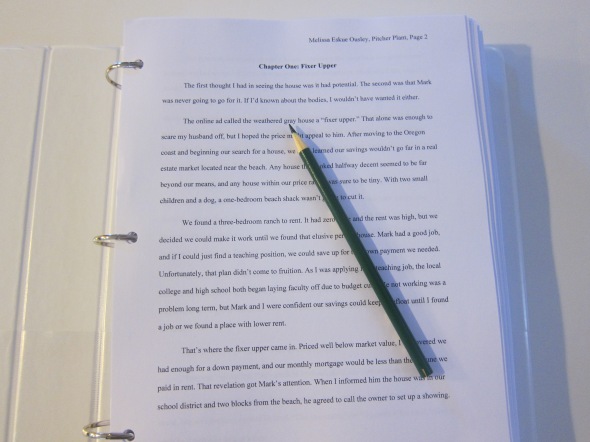
A few tips on writing your query letter. First, always be courteous and professional (say thank you). You’re applying for a job, so don’t assume you’ll get a contract. If possible, let the agent or publisher know why you’ve chosen to query them—in this case, because they liked your pitch. Include critical information: the title, word count, genre, and if requested via the submission guidelines, whether or not the query is exclusive. Follow that with a brief description of the book, and then a short bio. With your bio, you want to focus on relevant experience: other books you’ve written, notable accomplishments like awards or bestselling lists, and other experience related to writing. You don’t need to include much else, although if you wanted one sentence on your other interests, just to show your personality, that would probably be okay. Publishing professionals are more interested in the content of your book and whether or not it has the potential to sell than your hobbies.
As an example, here’s the query letter I sent to Filles Vertes Publishing after #PitMad:
Dear FVP Team,
Thank you for your invitation to share more about my novel at this week’s PitMad event. Here is the pitch you favorited: Buying a seaside fixer-upper seemed like a great idea until Tawny unearthed a murder victim. Now she’s next.
Set in a beachside town in the Pacific Northwest, PITCHER PLANT is a suspense novel with romance and elements of horror. It is complete at 85,500 words.
When thirty-year-old Tawny Ellis spots a weathered fixer-upper for sale in Seaside, Oregon, she jumps at the chance to own a house near the beach. She and her husband Mark are tired of sinking money into a high-priced rental, and hope by investing in the house, they can supplement their income by opening a bed and breakfast. Their marriage begins to unravel as repairs cost more than expected, budget cuts threaten Mark’s job, and Mark grows jealous over Tawny’s budding friendship with an attractive handyman. Tensions rise as Nicholas Stroud, the house’s former owner, begins stalking Tawny and her two young daughters. Tawny learns that Stroud lost his childhood home through foreclosure, and believes he may still be angry over the loss.
Then one of Tawny’s daughters starts talking about a new friend, one who might be imaginary. This friend bears a striking resemblance to a former resident, a little girl who squatted in the house with her drug-addicted mother during the foreclosure. Now the girl and her mother are missing, and Tawny suspects Stroud may be responsible for their disappearances. After finding evidence of foul play in the house, Tawny fears she and her daughters may become Stroud’s next victims.
I am an award-winning author living near Seaside with twin boys, a neurotic dog, and a piranha. Sign of the Throne, my debut young adult novel published by an independent press, won a 2014 Reader’s Favorite International Book Award and a 2014 Eric Hoffer Book Award. My third book, The Sower Comes, won a 2016 Eric Hoffer Book Award. My fourth book, Sunset Empire, was released this week in the Secrets and Shadows YA box set. Today I was excited to learn that the collection is a #1 Amazon Bestseller in the UK.
Besides my weekly blog on MelissaEskueOusley.com, I contribute monthly articles about writing, editing, and marketing to BookDaily.com and I have edited for Barking Rain Press and Lorincz Literary.
Thank you for your time and for considering my submission. The first 25 pages are included below.
Sincerely,
Melissa Eskue Ousley
I hope this is helpful. Comment if you have questions, and best of luck with your submissions!
© Melissa Eskue Ousley 2017
Books & Bread
What two things go well together? Artisanal breads and books! Join me and other local authors at the Blue Scorcher Bakery during the Second Saturday Art Walk in Astoria, Oregon. The event will be held on Saturday, February 11, from 5:30pm-8:30pm, at 1493 Duane Street. You can find a great new read and have it signed while you enjoy gourmet treats. This is a free event for readers of all ages.
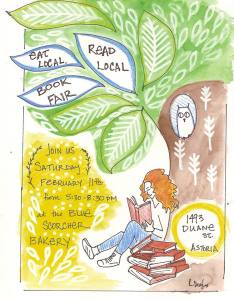
With multiple reading genres represented, there’s something for everyone: poetry, coloring books, contemporary fiction, historical fiction, fantasy, memoir, metaphysical, mystery, self-help, young adult, and more. Featured authors include Matt Crichton, Heather Douglas, Melissa Eskue Ousley, Diana Kirk, Andrea Larson Perez, Angela Sidlo, and Deb Vanasse. Here’s a little more about each author and what they write.
Matt Crichton
 I have a degree in engineering, have been a member of AmeriCorps and Peace Corps, worked at the YMCA teaching computer-based projects, and am currently pursuing a teaching (math!) certification. I like music, yoga, and cooking, and building fires on the beach. Somewhere along the way, I picked up poetry. Or maybe I should say it picked me up. Many of the poems I write come unexpectedly and I had better have a scrap of paper nearby or it will be lost to eternity. I write to express feelings, in response to lived experiences, to get the words that bug me out of my head. I write when inspired. I do not have a specific day or time I write. I wait for the lightning. I believe everyone should write if they are inspired. You never know who or how your words will affect.
Heather Douglas
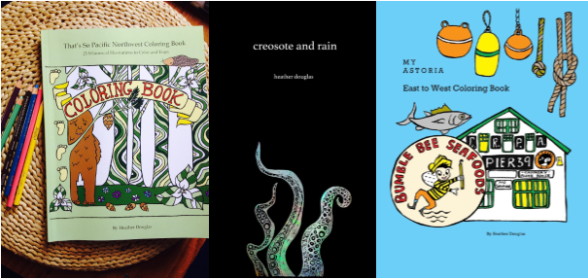
 Heather Douglas is a writer, illustrator and educator and the author of two coloring books, That’s So Pacific Northwest Coloring Book, My Astoria Coloring Book and one book of poetry entitled Creosote and Rain. She was a Writer in Residence through Astoria Visual Arts in fall 2016 and also writes for Coast Weekend, ESL101, Medium and is creator of local blog Astoria Rain (dot) com. Writing, creativity and old growth forests keep her sane and grounded in this crazy world. More of her work can be found on Oscar Astoria (dot) com.
 Melissa Eskue Ousley
 Melissa Eskue Ousley is an award-winning author living on the Oregon coast with her family, a neurotic dog, and a piranha. Her debut novel, Sign of the Throne, won a 2014 Readers’ Favorite International Book Award and a 2014 Eric Hoffer Book Award. Her third book, The Sower Comes, won a 2016 Eric Hoffer Book Award. Sunset Empire, a fantasy set in Astoria, debuted in the bestselling Secrets and Shadows young adult boxed set. Pitcher Plant, a mystery set in Seaside, will be released this spring. Her short stories have been included in Rain Magazine and The North Coast Squid. When she’s not writing, she can be found walking along the beach, poking dead things with a stick.
Diana Kirk
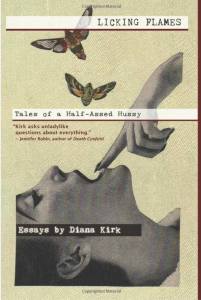
Diana Kirk, author of Licking Flames: Tales of a Half-Assed Hussy has been published in Thought Catalog, Nailed, Literary Kitchen and is a regular contributor to The Psychology of It and Five 2 One Magazine. When not writing personal or feminist essays, she’s pretty busy wifing, mothering and running two investment firms from her super fancy basement office.
Andrea Larson Perez
 Andrea Larson Perez, 52, relocated to the lower Columbia region in 1994. She has lived in Astoria, Oregon since 1997. A native of St. Petersburg, Florida, she is married and a mother of two sons, 26 and 23. She graduated from California State University, Sacramento with degree in Public Relations and a minor in Journalism.
After nearly 30 years serving clients in communications capacities, Andrea decided to turn her attention to writing. Her first book with Arcadia’s Images of America Series gave her an opportunity to dig into interesting local history at Camp Rilea where her husband, Col Dean Perez, was the Post Commander. Her interest in history and keen research abilities helped immensely in compiling and editing the first published history of Camp Rilea. Many supported and encouraged the process, most notably the past and current staff at Camp Rilea and the Oregon Military Department.
Her second title is part of Arcadia’s Postcard History Series focuses on vintage postcards of Astoria, Oregon. Having been a collector and postcard enthusiast for many years, her interest connected her to other local collectors and was a “natural” to become a book. It has been very well received and is headed to a second printing!
Andrea is currently considering a third title with Arcadia.
When not enjoying time with family or traveling, Larson Perez spends a good deal of time researching her family tree looking for stories to tell about characters she meets. Happy to be known as the “family historian,” she has uncovered many previously unknown facts about her ancestors who arrived in colonial America in 1630.
She enjoys membership in the Astoria Chapter of the Daughters of the American Revolution and serves on the Board of Directors of the Astoria Co-Op Grocery and The Astoria Ferry. She also participates in many community organizations, activities and events.
Angela Sidlo
 Angela Sidlo is coauthor of the new feel-good anthology book series The Silver Linings Storybook: Successful Leaders Share Inspiring Stories of Overcoming Stormy Days in Personal and Professional Life. The Silver Linings Storybook launched in June 2016 and published, landing on two #1 Paid Best Seller categories on Amazon.com.
Sidlo coauthored in Volume 1 & 2 of the new storytelling series, to share her story of self acceptance through hormonal imbalances, depression and fibromyalgia. Through her experiences she has developed programs and products as a health coach and aromatherapist to assist women who want to lose weight, balance hormones and live the life they dream of. Sidlo believes that “Healthy Individuals Create Healthy Communities”.
Deb Vanasse
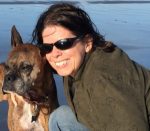
A recent transplant from Alaska, Deb Vanasse is the author of seventeen books. “Vanasse is talented,” says Foreword Reviews. “She can turn ordinary words into the sublime.” When she’s not at the keyboard, you’ll find Deb walking the beach with her dog, tending her vegetable garden, or immersed in a book.
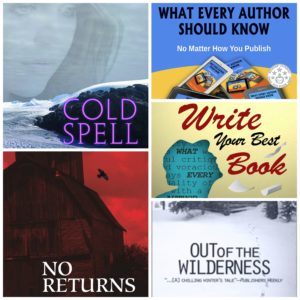
Thanks for reading. Hope to see you at the Blue Scorcher!
© Melissa Eskue Ousley 2017
News on Pitcher Plant

Who’s got a publishing contract? This girl! I’m thrilled to share that my suspense novel, Pitcher Plant, will be published this spring by Filles Vertes Publishing. FVP is a press with awesome staff, contagious creative energy, and great industry knowledge. I’m so grateful for the opportunity to work with them.
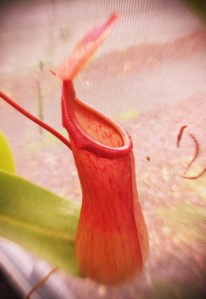
What’s Pitcher Plant about? It is set on the northern Oregon coast. Here’s a description:
When thirty-year-old Tawny Ellis spots a weathered fixer-upper for sale in Seaside, Oregon, she jumps at the chance to own a house near the beach. She and her husband Mark are tired of sinking money into a high-priced rental, and hope by investing in the house, they can supplement their income by opening a bed and breakfast. Their marriage begins to unravel as repairs cost more than expected, budget cuts threaten Mark’s job, and Mark grows jealous over Tawny’s budding friendship with an attractive handyman. Tensions rise as Nicholas Stroud, the house’s former owner, begins stalking Tawny and her two young daughters. Tawny learns that Stroud lost his childhood home through foreclosure, and believes he may still be angry over the loss.
Then one of Tawny’s daughters starts talking about a new friend, one who might be imaginary. This friend bears a striking resemblance to a former resident, a little girl who squatted in the house with her drug-addicted mother during the foreclosure. Now the girl and her mother are missing, and Tawny suspects Stroud may be responsible for their disappearances. After finding evidence of foul play in the house, Tawny fears she and her daughters may become Stroud’s next victims.

Join us on January 28 for the FVP launch party on Facebook, 7:30pm-10:30pm EST. Connect with publishing industry professionals and enter to win prizes! Giveaways include two full manuscript critiques, partial and submission package critiques, Amazon gift cards, and more!
© Melissa Eskue Ousley 2017
Favorite Reads of 2016

Happy Holidays! 2016 has been a Twilight Zone of a year, but I hope you’ve had some good moments in spite of that. I have. Some highlights were finding out my third book, The Sower Comes, won a book award, and hearing that the Secrets and Shadows boxed set had become a bestseller in the UK. I’ve had some nice opportunities, like releasing Sunset Empire and telling ghost stories on the Astoria Trolley on Halloween.
My blog will be taking a hiatus for a few weeks so I can focus on my family, but I’m looking forward to 2017. My goals are to finish a book called Riverbound I’m co-writing with a friend, and to finish editing a vampire novel for another author. I’m also excited about two upcoming book events. More on all that in January. In the meantime, there’s a giveaway for Sunset Empire on Goodreads. I hope you’ll enter if you haven’t already.
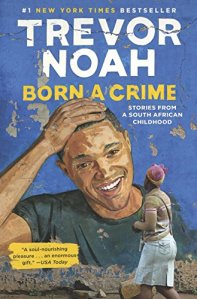 What are you reading right now? I just started Trevor Noah’s biography, Born a Crime. It’s a fascinating and timely read which I highly recommend. It’s about him growing up in South Africa during apartheid, and his mother having to keep him hidden since he was bi-racial and interracial relationships were illegal. If they’d gotten caught, his parents would have been thrown in jail, and he would have been taken away and put in an orphanage. Here’s the book description:
Trevor Noah’s unlikely path from apartheid South Africa to the desk of The Daily Show began with a criminal act: his birth. Trevor was born to a white Swiss father and a black Xhosa mother at a time when such a union was punishable by five years in prison. Living proof of his parents’ indiscretion, Trevor was kept mostly indoors for the earliest years of his life, bound by the extreme and often absurd measures his mother took to hide him from a government that could, at any moment, steal him away. Finally liberated by the end of South Africa’s tyrannical white rule, Trevor and his mother set forth on a grand adventure, living openly and freely and embracing the opportunities won by a centuries-long struggle.
Born a Crime is the story of a mischievous young boy who grows into a restless young man as he struggles to find himself in a world where he was never supposed to exist. It is also the story of that young man’s relationship with his fearless, rebellious, and fervently religious mother—his teammate, a woman determined to save her son from the cycle of poverty, violence, and abuse that would ultimately threaten her own life.
The stories collected here are by turns hilarious, dramatic, and deeply affecting. Whether subsisting on caterpillars for dinner during hard times, being thrown from a moving car during an attempted kidnapping, or just trying to survive the life-and-death pitfalls of dating in high school, Trevor illuminates his curious world with an incisive wit and unflinching honesty. His stories weave together to form a moving and searingly funny portrait of a boy making his way through a damaged world in a dangerous time, armed only with a keen sense of humor and a mother’s unconventional, unconditional love.
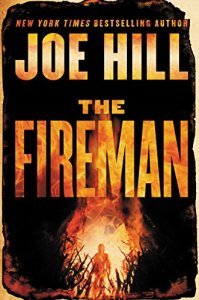 I also recommend one of my favorite reads of 2016, The Fireman, by Joe Hill. It’s about a plague that causes the infected to spontaneously combust. What I found so compelling about the book was the way society unraveled in the face of an end of the world pandemic. Here’s the book description:
The fireman is coming. Stay cool.
No one knows exactly when it began or where it originated. A terrifying new plague is spreading like wildfire across the country, striking cities one by one: Boston, Detroit, Seattle. The doctors call it Draco Incendia Trychophyton. To everyone else it’s Dragonscale, a highly contagious, deadly spore that marks its hosts with beautiful black and gold marks across their bodies—before causing them to burst into flames. Millions are infected; blazes erupt everywhere. There is no antidote. No one is safe.
Harper Grayson, a compassionate, dedicated nurse as pragmatic as Mary Poppins, treated hundreds of infected patients before her hospital burned to the ground. Now she’s discovered the telltale gold-flecked marks on her skin. When the outbreak first began, she and her husband, Jakob, had made a pact: they would take matters into their own hands if they became infected. To Jakob’s dismay, Harper wants to live—at least until the fetus she is carrying comes to term. At the hospital, she witnessed infected mothers give birth to healthy babies and believes hers will be fine too. . . if she can live long enough to deliver the child.
Convinced that his do-gooding wife has made him sick, Jakob becomes unhinged, and eventually abandons her as their placid New England community collapses in terror. The chaos gives rise to ruthless Cremation Squads—armed, self-appointed posses roaming the streets and woods to exterminate those who they believe carry the spore. But Harper isn’t as alone as she fears: a mysterious and compelling stranger she briefly met at the hospital, a man in a dirty yellow fire fighter’s jacket, carrying a hooked iron bar, straddles the abyss between insanity and death. Known as The Fireman, he strolls the ruins of New Hampshire, a madman afflicted with Dragonscale who has learned to control the fire within himself, using it as a shield to protect the hunted . . . and as a weapon to avenge the wronged.
In the desperate season to come, as the world burns out of control, Harper must learn the Fireman’s secrets before her life—and that of her unborn child—goes up in smoke.
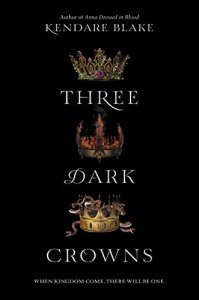 What to read in 2017? I meant to read Three Dark Crowns, by Kendare Blake, but I’ve run out of time. That will be top of my to-read list. Here’s what the book is about:
In every generation on the island of Fennbirn, a set of triplets is born: three queens, all equal heirs to the crown and each possessor of a coveted magic. Mirabella is a fierce elemental, able to spark hungry flames or vicious storms at the snap of her fingers. Katharine is a poisoner, one who can ingest the deadliest poisons without so much as a stomachache. Arsinoe, a naturalist, is said to have the ability to bloom the reddest rose and control the fiercest of lions.
But becoming the Queen Crowned isn’t solely a matter of royal birth. Each sister has to fight for it. And it’s not just a game of win or lose…it’s life or death. The night the sisters turn sixteen, the battle begins.
The last queen standing gets the crown.
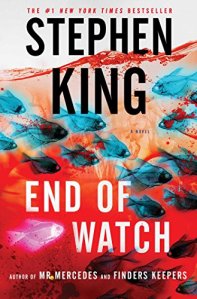 I haven’t yet read Stephen King’s End of the Watch either, so I’m going to have to rectify that. This book is the third of a trilogy. I love everything Stephen King writes, but this series has been a favorite. Here’s a description:
The spectacular finale to the New York Times bestselling trilogy that began with Mr. Mercedes (winner of the Edgar Award) and Finders Keepers—In End of Watch, the diabolical “Mercedes Killer” drives his enemies to suicide, and if Bill Hodges and Holly Gibney don’t figure out a way to stop him, they’ll be victims themselves.
In Room 217 of the Lakes Region Traumatic Brain Injury Clinic, something has awakened. Something evil. Brady Hartsfield, perpetrator of the Mercedes Massacre, where eight people were killed and many more were badly injured, has been in the clinic for five years, in a vegetative state. According to his doctors, anything approaching a complete recovery is unlikely. But behind the drool and stare, Brady is awake, and in possession of deadly new powers that allow him to wreak unimaginable havoc without ever leaving his hospital room.
Retired police detective Bill Hodges, the unlikely hero of Mr. Mercedes and Finders Keepers, now runs an investigation agency with his partner, Holly Gibney—the woman who delivered the blow to Hartsfield’s head that put him on the brain injury ward. When Bill and Holly are called to a suicide scene with ties to the Mercedes Massacre, they find themselves pulled into their most dangerous case yet, one that will put their lives at risk, as well as those of Bill’s heroic young friend Jerome Robinson and his teenage sister, Barbara. Brady Hartsfield is back, and planning revenge not just on Hodges and his friends, but on an entire city.
In End of Watch, Stephen King brings the Hodges trilogy to a sublimely terrifying conclusion, combining the detective fiction of Mr. Mercedes and Finders Keepers with the heart-pounding, supernatural suspense that has been his bestselling trademark. The result is an unnerving look at human vulnerability and chilling suspense. No one does it better than King.
Do you have any recommendations for my reading list?
Hope your holidays are wonderful, and all the best to you in the new year.
© Melissa Eskue Ousley 2016
Perfect for a Cold Day

It’s frigid on the Oregon coast today. Icy winds and snow, which turned into freezing rain, then hail, then more rain. The snow actually stuck for a little bit, until the rain started. Now it’s just cold–which means it’s the perfect weather for staying inside and eating comfort food, right? Right. Yummy food, warm slippers, and a good book. Perfection.

When I was in college, I babysat for this family with two young boys. Their Scottish grandmother came to visit and she made melt-in-your-mouth shortbread. It was to die for. I’ll never be able to make shortbread as good as hers, because she was magical and I am only a muggle. Nevertheless, I can share a simple recipe with you, so you too can partake.
This is really easy. Melt two cups of butter in a large bowl (if you use a glass bowl, you can do this in the microwave). Then stir in one cup of powdered sugar and three cups of flour. Mix it well and pour the batter into an ungreased 9″ x 9″ pan.
Even out the surface (I like to use a fork to make a pattern). Then sprinkle sugar on the top, or, alternatively, chocolate chips. If you go with chocolate chips, you’ll want to spread them with a knife after they melt during baking, and then let them cool.
Bake at 325 degrees for about 30 minutes. Then cut the shortbread into squares and serve them warm. Easy, amazing, and perfect for a cold day.
© Melissa Eskue Ousley 2016
Sunset Empire Launch!
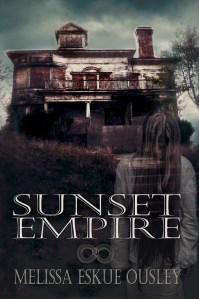
Thrilling news! Sunset Empire is finally (finally!) available as both an ebook and paperback on Amazon. I’m so excited to share this book with you, because it’s really a love letter to the north coast of Oregon, blending fantasy with history and showcasing some of my favorite legends and sites from the area.
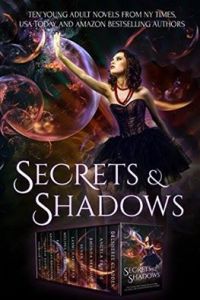
I’m also elated to share that it is included in the Secrets and Shadows box set, a young adult collection with ten fantasy, paranormal, and sci-fi novels from New York Times Bestselling, USA Today Bestselling, #1 Amazon Bestselling, and award-winning authors. This week Secrets and Shadows became a #1 Amazon Bestseller in the UK. I’m so grateful to all our readers who made this happen.
A few things about Sunset Empire:
- Stay tuned for giveaways on Amazon and Goodreads. I’ll also be giving away a Sunset Empire-themed prize when we reach 1,000 likes on my author page on Facebook.
- I’m currently looking for reviewers for Sunset Empire, so if you’re interested and willing to post reviews on Goodreads and Amazon, message me with your email address. I’ll send you a free ebook.
- Subscribers to my blog are eligible for a free short story or chapter. If you’re interested in receiving one, contact me with your email and I’ll pass that along.
- If you order Sunset Empire now, it will arrive before Christmas.
Here’s a description of the book, and another excerpt. Enjoy, and thanks for reading!
Description:
She may be guilty of arson, but she didn’t kill the burned girl haunting her.
After her house burns down, Elyse Pthan is forced to move to Astoria, Oregon to live with the strict grandmother she never knew. Rebelling against her grandmother’s rigid rules, Elyse discovers the terrible heritage her mother kept hidden. Her family may be responsible for the 1922 fire that nearly destroyed Astoria, the death of a girl who longs for vengeance as she haunts the tunnels beneath the city, and mysterious disappearances spanning hundreds of years.
Helping her uncover the truth is Phantom, an enigmatic and surprisingly attractive boy, considering his scars, his talent as a pickpocket, and his status as the local social outcast. A boy with a hidden weapon and a dark heritage of his own, that could turn him from friend to hunter.
Excerpt:
Phantom had been tracking the beast when he heard the first scream. It was coming from somewhere within Shively Park. He started running toward the sound, praying he wasn’t too late.
The creatures were growing bold. The one he was following had left its usual territory in the woods southeast of the city, and ventured alarmingly close to the Astoria Column, a popular place for tourists and locals alike. He wondered if the beast had been spotted by any of the visitors who had climbed the column’s spiral staircase for a view of the Columbia. He doubted it. On a sunny day, you could see all the way to the Pacific Ocean from that vantage point, but the day was overcast with a misty rain. In low light, the creatures camouflaged themselves so well against the backdrop of the forest, most people wouldn’t recognize them for what they were until it was much too late to get away.
Phantom had never seen one out in the open, but he knew they crossed roads sometimes because he’d seen deer carcasses outside the monsters’ traditional hunting zones. He’d even spent the night in a tree before, observing the creatures’ nocturnal activities. They liked the dark. At night, they had no need for camouflage. Darkness shielded them from detection, allowing them to move freely without fear of hunters like himself.
Running silently down the path toward the old bridge, Phantom could hear glass breaking. Someone, a girl, by the sound of her screams, was making a whole lot of noise. That was bad. She was about to attract the wrong kind of attention.
He couldn’t see the creature, but it was close. He could smell it. The air was thick with the pungent smell of death.
Phantom checked his weapon and then left the path, trying to stay hidden in the thick brush. He padded uphill so he’d have a better view of the bridge. He would need a clear visual of the beast to take aim.
He crouched down in a clump of ferns, behind a tree. Peering around the trunk of the tree, he could see her—the new girl, Elyse. What was she doing here? He thought back to his encounter with her at the battery and then later in the alley. She certainly had a knack for finding trouble.
She retrieved something from her pack and cradled it in her hands, before hurling it at the bridge like she was pitching a baseball. He cringed as the tea cup shattered, and looked around frantically, trying to spot the beast.
Out of the corner of his eye, he saw it coming—a blur of dark fur that seemed to blend in with the forest. The girl was poised, ready to launch another cup at the wall, when she seemed to suddenly realize something was wrong. She whirled around, a look of sheer terror on her face.
Phantom took aim at the dark shape bearing down her and released the bolt. To his horror, he missed.
Want more Sunset Empire? Get it here. Happy reading!
© Melissa Eskue Ousley 2016
Secrets & Shadows Launch!

It’s launch day for the Secrets and Shadows box set! This young adult collection includes ten full-length fantasy, paranormal, and sci-fi novels from award-winning and bestselling authors. Do you have your copy yet? If not, click here.
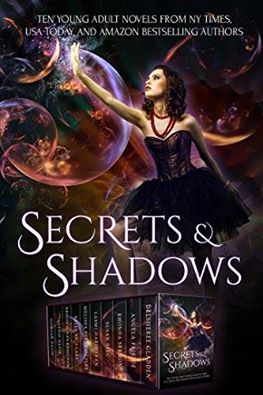
I’m thrilled that my newest book, Sunset Empire, is part of this collection. To celebrate, I’m sharing one of my favorite scenes with Elyse and Phantom, which features Fort Stevens State Park on the Oregon coast. Enjoy.
Excerpt from Chapter Five, Social Food Chain:
Mr. Mills led the group into Battery 245 at Fort Stevens. After the dark, unsettling walk through West Battery, Elyse was glad to see the bunker was outfitted with fluorescent lights.
“Battery 245 was built in 1944 to upgrade harbor defenses in World War II,” Mr. Mills explained as he led them down the narrow corridor, which ended in a T. There were a series of darkened rooms with opened doors on either side of the hallway. “The battery was self-contained, with its own power generator, plotting rooms, magazines, and other facilities. It was also designed to be gas-proof in case of chemical attack.” A few students laughed. “Yes, yes—you’re all very clever,” Mr. Mills said, a slight smile on his lips, “but let’s save the gas jokes until we’re outside in the fresh air. Come. On to the mine observation station and the steam plant.”
Elyse followed the other students out of the battery and stopped to read the plaque at the entrance. Hearing a scuffle behind her, she peered into the corridor. Jared and Parker jogged up the corridor, laughing. They were trailed by Leif, Maddy, Jackson, and Ava. She turned back to the plaque, feigning interest as they passed. Something about their hushed snickering worried her. What had they been up to?
She waited until they left, and then slipped back inside Battery 245. Her footsteps sounded overly loud as she walked down the corridor alone. At the junction, she turned a slow circle, studying each of the rooms. Nothing looked amiss, except one of the doors was closed. Not just closed—it was barred shut with a length of rebar. She was certain it hadn’t been before.
She stared at the door and then approached quietly, listening. The silence was eerie. Stomach churning, she grasped the rebar and pulled it loose from the door’s iron handle. Carefully, to minimize the noise, she set it on the floor of the corridor. Then she opened the door.
The boy with the scar sat cross-legged on the floor of the room, holding a cell phone. He looked up and then raised his eyebrows. “Oh. You. Not who I expected.” His bottom lip was busted and bleeding and his left eye was starting to swell.
“Who were you expecting?” Elyse asked. She thought she should feel guarded around him, considering what Lien had said about him being questioned in the Jenna Williams case. But she wasn’t afraid of him.
Phantom smiled, and then winced when his lip split open more. “The owner of this phone.” He returned his attention to the phone and swiped the screen, seemingly ignoring her. Then he glanced up. “What was the most annoying earworm from summer?”
Elyse stared at him. He’d clearly been beaten up, and he wanted to chat about music? Maybe his brain had gotten rattled in the fight. “What?”
“The most irritating pop song this summer. What was it?”
Elyse thought about it. “Tell Me, by Kat Savanna.”
“Never heard of it.”
Elyse laughed. “Yeah, you did. It was all over the net. You couldn’t have missed it.”
Phantom just looked at her blankly. “Maybe if you sang it?”
Elyse shook her head. “Uh, no.”
“Please?” He gave her a hopeful smile. It looked painful.
She crossed her arms. “I’m not going to sing it, but the lyrics were like, ‘Tell me I’m the one, summer’s just begun, tell me, say it’s true, I’m the only one for you.’ You know—total mindless, repetitive crap—gets in your head and you can’t get it out.”
Recognition dawned on his face. “Oh, that one.” He shuddered with mock horror. “It’s awful. Perfect.” He played with phone and then, more to himself than her, said, “Now—just have to change the ringtone…and…done.”
Phantom set the phone on the floor, and then retrieved a leather wallet from somewhere behind him. From the way he studied it, Elyse was certain it didn’t belong to him, any more than the cell phone did. He took out a twenty and shoved it in his jacket pocket. He started to close the wallet, then paused, thinking. Elyse watched, fascinated, as he retrieved a second twenty and stashed that in his jacket pocket as well. Then he closed the wallet, placed it on the floor in the middle of the room, and balanced the phone on top of it. He eyed the two items and then, satisfied with his work, rose to his feet and brushed off his jeans. “Let’s get out of here.”
Elyse put her hands on her hips. “So…I take it you’re a pickpocket?”
Phantom gave her a sly smile. “Something like that. But the way I see it, dude locks me in here, the least he can do is pay for my cab ride home.” His smile widened to a vulpine grin. “And dinner.”
“You’re not going back to school?”
He frowned, and Elyse got the impression she’d asked a dumb question. “I can’t very well show my face on the bus if I’m supposed to be locked in here, can I?” he asked. “Kind of ruins the mystique.”
Elyse had no idea what he was talking about. “Your lip is bleeding,” she said.
“Is it?” He wiped at it absently, and glanced at the blood on his fingers. “I’ve had worse.” She found herself staring at his scar and looked away quickly.
“You’d better run along,” he said, dismissing her with a wave of his hand. “Being seen with me will do nothing for your social standing.”
Elyse planted her feet. “I don’t care about stuff like that.”
“You should.” Phantom stepped around her, out into the hallway.
Elyse wondered why he would care about her social standing, but didn’t say anything. Instead, she followed him into the corridor and asked, “Why do they call you Phantom?”
He grinned. “For one, I’m pretty good at getting out of bad situations.” He pushed the door closed and secured it with the rebar.
It didn’t look quite right to Elyse, so she adjusted the metal bar so the door looked exactly the way it had when she’d encountered it. “And? What are the other reasons?”
But he just smiled and shook his head. “Some other time. Thanks for the rescue.”
Stay tuned for more news about Sunset Empire. It will soon be available as a single paperback!
© Melissa Eskue Ousley 2016
Secrets & Shadows, Part 3
Just a few more days until the release of Secrets & Shadows! If you haven’t pre-ordered your copy yet, you can do it here.
Today I want to introduce three more of the wonderful authors whose books are included in this young adult box set: USA Today Bestselling Author Kristin D. Van Risseghem, International Bestselling Author Sophie Davis, and International Bestselling Author Siobhan Davis. Check out their books and give them a follow!
Kristin D. Van Risseghem
USA Today Bestselling and award-winning author Kristin D. Van Risseghem grew up in a small town along the Mississippi River with her parents and older sister. Currently, Kristin lives in Minnesota with her husband and two Calico cats. She also loves attending book clubs, going shopping, and hanging out with friends. She has come to realize that she absolutely has an addiction to purses and shoes. They are her weakness and she probably has way too many of both.
In the summer months, Kristin can usually be found lounging on her boat, drinking an ice cold something. Being an avid reader of YA and Women’s Literature stories, she still finds time to read a ton of books in-between writing. And in the winter months, her main goal is to stay warm from the Minnesota cold! Her book, Swords & Stilettos, is included in the Secrets & Shadows box set.
Here’s a description of the book:
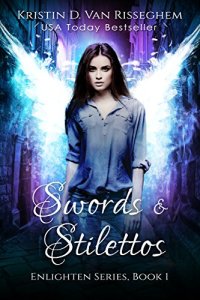 Zoe Jabril needs to devise a kick-ass plan to save the world ASAP. Otherwise, Armageddon starts the day she turns eighteen—and if that happens, everything is going to hell. Literally.
She could be any other 17-year-old attending parties and checking out cute guys–except she discovers her best friend is a Guardian Angel and the boy she crushes on is a Nephilim, both sent to protect her from the demons who want her dead.
Now Zoe has to deal with growing feelings toward the Nephilim, who spreads a strange electrical current through her body every time he touches her. And she’s under constant attack from Demons, trying to stop her from fulfilling the Prophecy: a girl will be born who will unite Angels, Nephilim, Fairies, and Werewolves to battle evil. Then she has to control newly found talents if she’s to prevent the devil from escaping Hell.
Connect with Kristin on her website, www.kristinvanrisseghem.com.
Sophie Davis
“Sophie Davis” is the pseudonym for two best friends, roommates, and now writing partners. The pair met at Penn State’s Dickinson School of Law in 2005 and instantly bonded over their love of great books and bad horror movies. After they graduated, when one longed for the ability to read minds so she wouldn’t have to study for the bar exam, a Saga was born. When the Talented Saga went on to be an internationally bestselling series, the girls decided to throw caution to the wind and follow their shared life-long dream of being writers.
The duo currently lives in Washington, D.C. with a poodle and a rescued mutt. The pups are their faithful companions–with frequent social media appearances–as the girls navigate the world of Indie Publishing. Their book, Talented, is included in the Secrets & Shadows box set.
Here’s a description of the book:
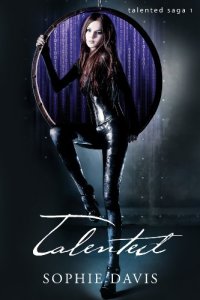 Block it out.
Impossible for Talia Lyons. When you’re a Mind Manipulator, it’s hard enough to block the thoughts of others, let alone your own.
Block it out.
The pounding, siren-ready world Talia inhabits as she trains with her fellow Hunters. The physical demands. The emotional toil.
Block it out.
The secrets that Talia’s boyfriend is hiding. Talia’s unbidden feelings of frustration and annoyance toward her teammate, the Casanova of the compound. The wondering why she cares what he thinks.
Block him out.
Ian Crane. The man behind the bloodshed marring Talia’s memories of her murdered parents. The man she’s determined to kill.
Block it all out. Focus.
Talented is an emotional raw, Dystopian Romance about the life of a girl with extraordinary psychic powers, and what happens when a heart is torn between love and rage.
Connect with them on their website, www.sophiedavisbooks.com.
Siobhan Davis
Siobhan Davis writes emotionally intense young adult fiction with swoon-worthy romance, complex characters, and tons of unexpected plot twists and turns that will have you flipping the pages beyond bedtime! She is the author of the Amazon bestselling True Calling and Saven series.
Siobhan’s family will tell you she’s a little bit obsessive when it comes to reading and writing, and they aren’t wrong. She can rarely be found without her trusty Kindle, a paperback book, or her laptop somewhere close at hand.
Prior to becoming a full-time writer, Siobhan forged a successful corporate career in human resource management.
She resides in the Garden County of Ireland with her husband and two sons. Her book, Saven Deception, is included in the Secrets & Shadows box set.
Here’s a description of the book:
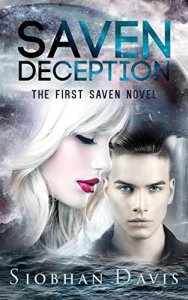 The truth doesn’t always set you free.
I’ve fallen hard for an alien, but he’s harboring secrets. Massive secrets that threaten the very essence of humanity. How can I give him my heart when his race plans on taking my future?
Sadie Owens has been slowly dying inside. Bit by bit, piece by piece, day by day. Trapped in a life she hates, she relies on only one person–herself.
Despised by her family and betrayed by an unscrupulous government, Sadie dreams of a different life. When she is chosen to participate in the government’s new social experiment, she is ecstatic at the prospect of spending six months in Thalassic City, the shiny new city under the sea.
Immediately drawn to Logan Chandler, Sadie is captivated by the beautiful boy with the ocean-blue eyes. Logan seems to embody everything that has been forbidden, but he isn’t all he appears to be.
Confused over Logan’s true intentions and concerned with best friend Jenna starts transforming in front of her eyes, Sadie partners with newcomer Jarod in a bid to uncover the government’s real agenda. The truth is more shocking than anything she could ever have imagined.
When Sadie finally understands why the Saven walk among us, will it be too late to save her heart and the human race?
Connect with Siobhan on her website, siobhandavis.co.uk.
Thanks for reading!
© Melissa Eskue Ousley 2016
Secrets & Shadows, Part 2
I’m continuing the countdown to the release of Secrets & Shadows, coming November 30. If you haven’t pre-ordered your copy yet, you can do it here. Today I want to introduce three more of the amazing authors whose books are included in this young adult box set: New York Times and USA Today Bestselling Author Susan Stec, New York Times and USA Today Bestselling Author Laxmi Hariharan, and International Bestselling Author Kelly St. Clare. Check out their books and give them a follow!
Susan Stec
From driving a food wagon onto construction sites during her hippie days (peace, love, and a sparkling marijuana-induced smile) to working as an investment banker, Susan Stec finally found her niche, writing what she loves to read: fantasy and horror. She lives with her husband (who is perfectly normal) and three King Charles spaniels (also normal) on 50 acres of woods, fields, and streams in upper Michigan. Her book about fairies, The Other F Word, will be included in the Secrets & Shadows box set.
Even with wings, you can’t fly away from fate.
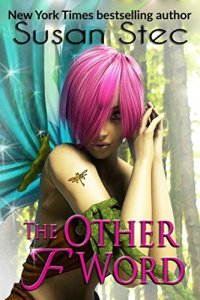 What would you do if you found out everything you’ve ever known was a lie?Amidst bullying, homework, and friends being injured, the fairy, Dekram, and her friends discover something strange going on with their classmates. On the advice of Dekram’s father, they begin to investigate. When they find students sneaking into the human world, it’s obvious there’s more to the story than they realized.
Drugs. Destiny. Destruction. Nothing is as it seems, but one thing is for certain: Dekram’s whole life is about to change.
Laxmi Hariharan
Laxmi Hariharan is a New York Times and USA Today bestselling author of paranormal romance and urban fantasy. Her stories intersect paranormal action-romance with mythology and are set in a near dystopian future. Her book, Chosen, the second book in the Many Lives Prequel Series, will be included in the Secrets & Shadows box set.Here’s a description of the book:
His family is being held for ransom by a deadly mastermind.
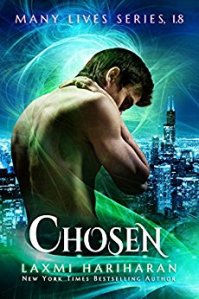
Vik never should have left his family, but when his father brings his half-brother Vishal home, life will never be the same.Vik thinks things will be better now that he’s gone. He’s met the love of his life, his future looks bright, and then everything is shattered.
Now, his family’s life is hanging in the balance, and only Vikram can do what needs to be done to save them.
Kelly St. Clare
When Kelley St. Clare is not reading or writing, she is lost in her latest reverie. She can, quite literally, drift past a car accident while in the midst of her day dreams, despite the various police sirens and chaos.
Books have always been magical and mysterious to her. One day she decided to start unraveling this mystery and began writing. Her aim: to write stories she would want to read.
A New Zealander in origin and in heart, Kelly currently resides in Australia with her soon-to-be husband, a great group of friends, and some huntsman spiders who love to come inside when it rains. Their love is not returned.
Her book, The Retreat, is included in the Secrets & Shadows box set.
Here’s a description of the book:
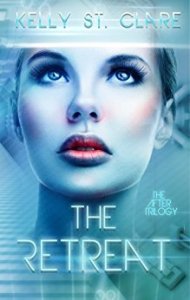 Earth was ruined. Humankind destroyed. And it’s old news.
Romy’s life is simple–for a genetically enhanced space soldier: pick up space junk with her four friends, and stave off the invaders fixated on stealing Planet Earth.
It isn’t much. But it’s temporary–only another 850 years to go, give or take. Then the 4000 space soldiers can reinhabit their beloved homeland once more.
When her crew tangles with a gulp-worthy alien mothership, Romy’s return to Earth is brought forwards at hurtling pace. And what she finds on the ground defies everything she’s been told.
Strength comes from the unlikeliest of quarters.
As does leadership.
…As does betrayal.
Connect with Kelly on her website: www.kellystclare.com.
Thanks for reading!
© Melissa Eskue Ousley 2016
Secrets & Shadows, Part 1
Secrets & Shadows launches November 30! Today I want to introduce you to three of the amazing authors whose books are included in this box set: USA Today Bestselling Author DelSheree Gladden, USA Today Bestselling Author Angela Fristoe, and International Bestselling Author Rhonda Sermon. Check out their work, give them a follow, and don’t forget to pre-order your copy of Secrets & Shadows!
DelSheree Gladden
Native to New Mexico, DelSheree Gladden and her husband spent several years in Colorado for college and work before moving back home to be near family again. Their two children love having their cousins close by. When not writing, you can find DelSheree reading, painting, sewing, and trying not to get bitten by small children in her work as a dental hygienist. DelSheree has several bestselling young adult series, including Invisible, which was part of the USA Today Bestselling box set, Pandora. The Date Shark Series is her first contemporary romance series, and the first book in her upcoming new adult series, The Ghost Host, will be included in the Secrets & Shadows box set.
Here’s a description of the book:
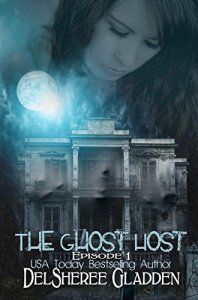 Everyone thinks Echo Simmons is crazy, but being The Ghost Host isn’t just a YouTube hoax like people think. It’s the only way to control the ghosts haunting her…at least until the FBI shows up asking questions.
The first eighteen years of Echo Simmons’ life have been less than ideal. On more than one occasion her parents have considered committing her. They don’t believe she sees ghosts or that they harass her on a daily basis. So when a rogue ghost begins tormenting her, they’re the last people she’s going to tell. Her best friends Holden and Zara are doing their best to help, but ghost attacks are only the beginning of Echo’s problems.
Handling the ghosts by giving them a voice on YouTube through her webshow has been her saving grace—even if her parents think it’s all a hoax—but that gets a little complicated when the ghost of Madeline Crew reveals a little too much about her previous life and the FBI shows up at her door wanting to know how she gained access to long-buried government secrets.
It just keeps getting worse from there. Madeline’s message to her great grandson sparks a strange connection between Echo and Malachi, which leads to Georgia, secrets, mistakes, love, lies, and life changing revelations.
Connect with DelSheree on her website, DelShereeGladden.com.
Angela Fristoe
Angela grew up in Alberta, Canada. She dreamed of becoming the next Dian Fossey or Jane Goodall, until she realized she wasn’t all that keen on the outdoors or animals. Instead, she went into education and focused on elementary education and helping struggling readers. Her passion for writing grew gradually after being ignited by The Hunger Game and Twilight crazes. Angela lives on Vancouver Island with her family, where she is pursuing her Masters degree while continuing to write and serve as an instructional coach. Her award-winning book Waken, book one in the Woods of Everod series, will be included in the Secrets & Shadows box set.
Here’s a description of the book:
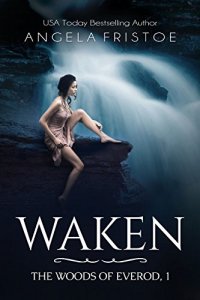 Confronting the truth could kill her.
After years of abuse and eventual abandonment, Janie wants to forget her parents ever existed. Moving to her mom’s hometown of Everod doesn’t make that easy. Then she meets Tristan. The emotions he ignites within her are almost enough to make her ignore all of the weird things he says. Almost enough to ignore the way the entire town seems ready to pounce on her as if she were fresh meat.
Almost, though, isn’t enough when Janie finally discovers what the town is hiding. The people of Everod have been waiting for Janie and if she hopes to survive, she’ll need to confront the truth of who and what she really is.
Connect with Angela on her website, AngelaFristoe.com.
Rhonda Sermon
Rhonda Sermon lives in Perth, Western Australia with her husband and two children. Her debut young adult urban fantasy novel The Midnight Society was a finalist in the Young Adult category and overall runner up in the The Strongest Start 2012 Contest hosted by TheNextBigWriter.com.
Rhonda was determined to write a book which teens and their parents would all enjoy reading. A book filled with adventure, magic and history. Not only does Rhonda’s book offer abundant action and suspense, but it also tackles the themes of family, friendships, first love, betrayal, sacrifice, loyalty, the devastation of war, fighting for the greater good, and promises to leave readers thinking hard about what truly matters in life. Rhonda has created believable and engaging characters. There are interesting and unexpected plot twists from beginning to end. Nothing and no one is as they seem.
On the good days, she adores writing, on the challenging days, it’s still awesome. Her two ragdoll cats can often be found helpfully walking over her keyboard, chasing her mouse or generally complaining loudly about the lack of priority their needs are being given.
The Midnight Society was originally released as Timesurfers, and will be included in the Secrets & Shadows box set.
Here’s a description of the book:
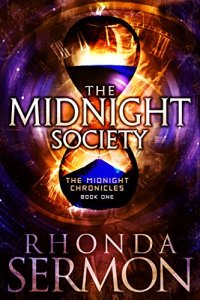 Her life is a carefully manufactured lie. It’s kept her safe and hidden until now. Witness protection has a protocol for every threat – except magic.
Fifteen-year-old Cate is seeing things. A ridiculously charismatic boy just appeared out of thin air, disarmed a bomb at a busy bus stop and then vanished again. Everyone around her was oblivious because they were frozen like statues the entire time.
Cate has stumbled into an invisible war in a realm filled with dark magic and time travel. She is now being stalked by not one, but two dangerous wizards.
When her brother disappears, a terrified Cate is forced into the brutal world where she must risk her life to search for him. Can she overcome the devastating and potentially deadly betrayal to find him?
Connect with Rhonda on her website, www.RhondaSermon.com.
Thanks for reading!
© Melissa Eskue Ousley 2016
Big News!
BIG NEWS! Sunset Empire is being published! It will be included in a new young adult box set, Secrets & Shadows! It releases on November 30.
The box set contains paranormal, urban, science fiction, and fantasy novels from ten amazing authors. Check out the cover. Isn’t it gorgeous?
Here’s the description and the author line up for the set:
Packed with fairies, witches, shifters, ghosts, space soldiers, deadly magic, gritty dystopian worlds, complicated relationships, and the ultimate swoon worthy love interests, follow ten badass heroines with remarkable powers and gifts as they face extraordinary challenges and decisions with potentially deadly consequences. They will stop at nothing to protect everyone and everything they love. They are fierce!
With over a million words and more than 700 combined four and five star reviews, this is your ultimate young adult collection of mesmerizing paranormal, action-packed urban fantasy, enthralling time travel, gripping dystopian and captivating space operas from 10 Award-Winning, New York Times, USA Today, and International Bestselling authors!
USA Today Bestselling Author DelSheree Gladden
USA Today Bestselling Author Angela Fristoe
International Bestselling Author Rhonda Sermon
NY Times and USA Today Bestselling Author Susan Stec
NY Times and USA Today Bestselling Author Laxmi Hariharan
International Bestselling Author Kelly St. Clare
Award-Winning Author Kristin D. Van Risseghem
International Bestselling Author Sophie Davis
International Bestselling Author Siobhan Davis
Award-Winning Author Melissa Eskue Ousley
The boxset is now available for pre-order, on SALE for only 99 cents, which is a crazy low price for ten books.
Pre-order here: http://amzn.to/2fuiyZs
Sunset Empire will be released at a later date as a paperback. Here’s the cover, designed by the incredibly talented DelSheree Gladden (who is one of the authors in the box set).
I’m so excited to share this with you all! Stay tuned for opportunities to get an advance reader copy of Sunset Empire for read and review.
Also, if you’ve not yet read The Sower Comes, the third book in the Solas Beir Trilogy, now’s your chance. There’s a new giveaway on Goodreads. It ends November 16.
Thanks for reading!
© Melissa Eskue Ousley 2016
Getting Naked in Public

This weekend I went to a release party held at the Hoffman Center for the Arts for the North Coast Squid, a literary magazine. I was honored that Sacred, one of my short stories, had been accepted for publication, and I was excited to read it to an audience. I was a little nervous too, if I’m honest. I don’t have much fear about speaking in public, but reading from my own work is different. It’s more intimate.
It’s like I told my writing class: sharing your writing with another human being is like getting naked in public. Not that I’m in the habit of actually exposing myself—trust me, nobody wants to see that—but when you write, you bare your soul. When you show your work to another person, you leave yourself vulnerable—not just to criticism, but to being seen. You can hide behind a nom de plume, but you are still the force behind the words, giving them life.
Even if your work isn’t autobiographical, there is some part of you that goes into it. We write what we know, how we think, how we see the world. It takes courage to put yourself out there, to share something that intimate. “It takes guts,” I told my class.
“Guts with a Z,” one of my students replied.
“Guts with a Z,” I agreed. It takes gutz, and I applaud anyone who shares their creative work, even if it’s only with one other person. Not just the writers, but the artists, singers, musicians, dancers, designers. Anyone who creates, taking what’s in their heads and sharing it with others, making the world a better place.
It takes courage to give and receive feedback too, and that’s what we’re doing in class. Helping each other strengthen our work, so when we send it out into the world, it’s practically bulletproof. We’re helping each other become better writers by encouraging each other and learning from each other.
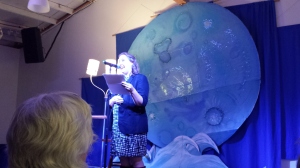 My reading of my short story went well. People laughed in the right places, my voice held out, and I didn’t trip over my feet when I left the stage. I got lots of compliments on my work afterwards. The best one was from a man who said he appreciated how my characters changed from the start of the story to the end. “Thanks,” I said, pleased that he understood the point I’d been trying to convey about the conflict in the story. “I wanted to show that even though people can be unpleasant, there’s always a reason, something in their history that has led up to that point.”
It made me feel good that there was so much warmth and support at this event for fellow writers and artists. I loved listening to the other pieces, fiction and non-fiction, as well as poetry. It’s good to get out of my writing space and hear what other people are doing, to see their courage as they share their work. It takes gutz to do what we do, and that inspires me.
© Melissa Eskue Ousley 2016
Ghosts of My Ghost

 Today I’m pleased to feature fellow Oregon coast author, Gideon For-mukwai. Gideon considers himself a Story Warrior because he is tireless and restless in the pursuit of helping emerging authors, presenters, and coaches to tell captivating personal stories for profit or for entertainment.
His book, The Science of Story Selling: How to Win Hearts & Minds for Profit and Purpose, provides easy to use tools, techniques, and strategies for using storytelling to captivate, connect, and persuade. It is only for those who want to use their stories to sell more and persuade more by coming across as likable, relatable, credible, and memorable.
Want a copy of his book? You can get it here. If you buy it, he’ll throw in a free audible version, worth $17.
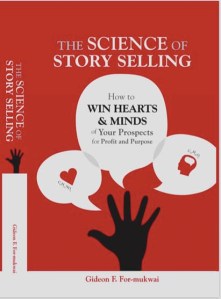
You can also download a copy of How to Connect and Persuade with the Power of Storytelling.
I usually ask guest authors to share a scary story. Gideon has one, but it’s not about the supernatural–which makes it even more frightening. Here’s his story:
You never know when a disaster would strike! You never know when you’d stand face to face with a moment of terror that could destroy your life.
A few times in my life, I’ve faced life-threatening moments. As a child growing up in the dusty fields of Africa, I survived two lightning strikes in two years; each of which killed nearby animals and destroyed the buildings in which we were taking refuge. Later on in life, as an adult in Singapore, my kayak capsized in the volatile waters of the South China Sea. What was I doing on the South China Sea? Ask me, why were you there?
Of all that has happened, nothing compares to the terror I felt one night in Orlando, Florida. It was drizzling in Orlando late that evening around 10.35 pm, when I got into my car to drive across town to my friend Watson’s apartment. Watson lived barely four blocks away from Universal Studios Orlando. At the back of my car, I had my luggage, my powerpoint slides, the script of my speech in Toronto, my sleek laptop, grey suit, and yes, my gold-plated nail clip.
As I drove across town, I rehearsed my speech out loud in my car with my hands on the wheel. I could see myself on stage in Toronto, Canada in two days with a fine smile. I had lofty dreams of of getting multiple requests to fly in again to conduct more presentations. As those beautiful thoughts swirled through my mind, I pulled into into the parking lot.
Unbeknownst to me, as I stepped out of my beat-up 2003 Nissan Sentra, I saw two young black teenagers wearing basketball hoods rushing toward me. As they got closer, I heard one of them saying in a low pitch, “Get down! Get down!”
“OMG, OMG! Why are you doing that?” I asked. Without saying a word, the other skinny teenager pointed a pistol directly to my head, at very close range with his fingers the trigger. I was petrified, horrified, and terrified with unspeakable fear. In my desperation, I offered a plea, “Guys, take my wallet, take my wallet!” As I handed my wallet to one of them, I pleaded, “Take all the money, but please return my driver’s license.”
One of them grabbed the wallet, the other shoved me to the side. In a split second, they both jumped into the car, backed out, and sped off into the drizzling darkness. I stood there speechless, hopeless, and clueless!
My car was gone, and all that mattered to me and my professional success was gone in a less than seconds. I was so broken. It all happened too fast. I did not know what to say or do. I was clueless. How was I going to travel to Toronto the next morning, why is life so unfair? This is disgusting!
As the young thugs backed out they crushed my laptop bag with my white Acer 13-inch laptop. It crushed my heart more than anything else. All my data, all my files were gone. In less 60 seconds, they had dispossessed me of all that I had worked to acquire.
In a trembling voice, I called 911 to report the incident. For the first time in my life, when a police officer arrived at the scene and asked my name, I said, “They were black kids wearing basketball hoodies.” He said, “No, I mean what is your name?” I was blank for over four seconds before remembering both of my names. I was still hyperventilating.
Three months after that incident, one evening at sunset, I went into a Haitian bakery to buy some bread. While standing at the counter, I turned around saw two black men with basketball hoodies standing by the door. I felt a sudden thunder bolt of fear striking through my heart. Even though I had paid for my bread, I turned around and jumped out and started galloping on my way to my apartment like a stallion. I ran all the way back to my apartment without ever looking back. With every single step I took, I felt like the hoodie men were chasing and closing in on me. That night, even the fastest Nascar drivers could not catch me!
After I bolted my door, I was sat at my table breathless for several minutes. That night, I slept hungry. Throughout the night, I kept thinking those men were standing by my door. It has been over eight years, since that incident happened. Each time I get out of my car in a drizzle, I still get sweaty palms and flashbacks of terror. Each time I see someone on TV with a basketball hoodie, my blood pressure skyrockets. That incident taught me that what scares you most, is often not a ghost. In my case, what scares me the most is not my ghost. Very often, it is the ghosts of my ghost.
Thanks for joining me today, Gideon!
© Melissa Eskue Ousley 2016
Take Stock

Now and again when life gets busy, I find I need to step back and think about what I’m doing and where I’m headed. Life has been like that recently, with the start of school for my kids and the start of the term at the college where I work, teaching writing classes and advising students. Sometimes things get so busy, I can hardly remember my own name. Who am I? What year is it? Don’t ask me how old I am, because I always forget. That probably means I’m old.
Anyway, taking stock…I’m sad to say I haven’t done much writing lately, but maybe that’s not terrible, because it’s given me space to think about my current writing projects and how I can improve them—fleshing out characters more and tightening scenes. A friend and I are co-writing a novel about a coastal town under siege. It’s been fun to think about our villains and figure out how to build the story around them. The project is in the early stages, so I can’t share much yet, but at some point I will.
I’ve been thinking a lot about the craft of writing because I’m teaching a class on short stories, starting Monday. Writing a short story is a different experience than writing a novel. You generally only have time to explore one major character and one conflict, and the writing has to be tight to be effective. You get in, you make your point, and you get out. You can’t afford to waste words. That’s a good skill to practice for writing a longer story too, because even though novels are more forgiving, each word should have a purpose. I’ll also be editing another novel for Barking Rain Press. I’m excited about this one because I loved the concept when I saw the author’s submission. No spoilers, but I can say the book portrays vampires in a way I’ve not seen before.
Besides the class and editing, October is filled with writing events. On October 8th, I’ll be at the release party for the North Coast Squid at the Hoffman Center in Manzanita, reading an excerpt from my short story, Sacred. This was my first time to submit work to the Squid, and I’m honored to be included in the publication.
On October 15th, I’ll be participating in the Written in the Sand Authors Fair, sponsored by Beach Books in Seaside. I’m thrilled to be a part of this, and grateful to Beach Books for all they do to support local authors. It’s a fun event for me, connecting with readers and other authors at one of the best bookstores on the coast.
 Then, on Halloween, I’ll be telling ghost stories on the historic Astoria Trolley. This event was so much fun last year, and I’m excited to participate again. I’ll be talking about local legends and hauntings, as well as sharing classic ghost stories.
Although I haven’t done much writing lately, I have done some reading. I know—the time I spent reading could have been spent on writing. The thing is, if you want to write and you want to improve your skills, you’ve got to read, and you’ve got to have a critical perspective when you do, thinking about why the author makes the choices they make about writing. The more you read, the better you’ll write. The two go hand in hand.
So, what have I been reading? I just finished The Last Star, the third book in the 5th Wave series by Rick Yancey. This is a fantastic young adult sci-fi series, and it’s not just for teens. There are some big concepts in this one—genocide, and what it means to be human. The methods the alien invaders use to take over our planet are diabolical, and the books are full of twists I didn’t expect. If you saw the movie, don’t let it deter you from the books. As is true most of the time, the books are better because they have more substance. The movie had great action, but the story was abbreviated on film and there wasn’t time to get to know the characters. Read the books instead.
I also read The Handmaid’s Tale by Margaret Atwood. Although it’s an older sci-fi book, first published in 1985, it has a similar feel to more recent dystopian books. The world has changed drastically: society is controlled by a religious cult and women are property of the state, forced into roles where they have no rights over their own bodies. It’s well-written and an important read in thinking about human rights and equality. It’s a frightening read too, because even now, in 2016, there are places in the world where women don’t have rights and are forced into roles similar to what is described in the book. It is also disconcerting to read this book in our current political climate, where a certain presidential candidate makes misogynistic statements on a regular basis.
I have a number of books on my to-read list, but I’ll share one that stands out: Three Dark Crowns by Kendare Blake. I loved Blake’s first book about a vengeful ghost, Anna Dressed in Blood, which hooked me from the start. She’s a talented and witty author. Her latest book is a YA fantasy about three sisters who must fight to the death for the crown. They all are thought to have extraordinary powers, but two of them might be faking. Even so, the strongest sister might not win. I can’t wait to dive into this world of intrigue and treachery.
What are you reading? Any recommendations?
© Melissa Eskue Ousley 2016
Urine Sample

I need to preface this post by saying the universe has a twisted sense of humor.
First, my dog got a bladder infection. I took Gryphon to the vet, and we came home with a pricey bag full of goodies to patch her up, including a vial of antibiotics. You know how people and their dogs start to resemble each other after a while? Well, the next week I had a bladder infection too. We must be twins. We were even on the same meds, though mine were cheaper than the ones I got for the dog. Thanks, universe?
Anyway, three days after Gryphon was done with her pills, the vet wanted me to obtain a urine sample from the dog and bring it in so she could test the sample and make sure the infection was gone. I’m not in the habit of collecting urine, so I had no idea how I was supposed to do this. I have a friend who recently had to do this for her dog though, and she advised me to use a pie pan or some other container with low sides so it would easily slide under the dog while she was doing her business.
Here was the plan. First thing in the morning, I’d put on rubber gloves, grab a disposable container with a lid, and follow the dog out into the yard to get the sample. Simple enough.
I got up, still in my pj shorts, top, and socks, and slipped my feet into flip-flops before following the dog outside. (Yes, socks and flip-flops. What?) Meanwhile, back in the house, my husband turned to my son and said, “This is not going to go well for your mother.”
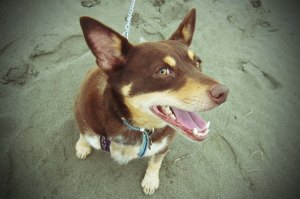 The first part of the plan went okay. I had the gloves on and the container in hand. Things went awry when the dog spotted the plastic dish and thought I had food for her. She got excited and started jumping around. Then she landed on one of my flip-flops while I was trying to dodge her. The thong pulled loose from the shoe, rendering it useless.
That, of course, was the moment Gryphon decided she needed to pee. Urgently. She trotted off to a corner of the yard, which meant I had to limp after her wearing only one flip-flop. My shoeless foot grew damp on grass wet with what I hoped was only dew.
I caught up to Gryphon and shoved the container under her butt. She looked up at me, aghast. Could the dog speak, she would have said, “What the heck, lady? Personal space.” Then she scurried off to the opposite corner of the yard, pee still dripping from the spout.
I lurched after her, muttering things that shouldn’t be spoken in polite company. Again, I tried to obtain a sample. I caught a few drops in the container before the dog gave me another dirty look and scampered off. Strike two.
I tried a third time, and got about a teaspoon of pee. Despite the gloves, I also managed to get pee on my hands. I believe there was more urine on my hands than in the dish.
I gave up and called the vet. “So, um, how much urine do you need in the sample to do the test?” I crossed my fingers, hoping the answer was a drop or two. It wasn’t. “Okay,” I said. “I’ll try again tomorrow.”
In hindsight, I see my error. I should have put a leash on the dog so I wouldn’t have to chase her around the yard. Common sense, I know—now. I probably should have worn sensible shoes as well.
I wised up for day two.
First, I put the dog on the leash. Then, I took myself out of the equation entirely, and made my husband do the deed. Voilà! It worked like magic. An acceptable sample and zero pee on my hands.
The husband doubled bagged the urine sample and passed it on to me for delivery.
When I dropped off the sample, the vet’s assistant gave me a smile and said, “Thank you.”
“That’s the first time anyone’s thanked me for handing them a container full of pee,” I told her. “But you’re welcome.”
© Melissa Eskue Ousley 2016
Rejection

Rejection sucks. We all face it at one point or another, and if you’re a writer, you might encounter it more than other people because you’re constantly making yourself vulnerable, whether you’re submitting your work to agents, publishers, or book reviewers. You can’t make people fall in love with you; you can only submit your best work and hope that someone will like it enough to give you a chance.
Even though I’ve had some of my work published, I’m still pitching projects, and even though I get more positive feedback than I used to, I still get rejections. I like to think I’ve gotten pretty good at dealing with rejection. These days when I get a rejection letter, I don’t even flinch. I can’t afford to waste energy feeling bad about another failed attempt. I’d rather spend that energy creating. I tell myself, “Okay, now move on.” I have a spreadsheet I use to keep track of queries sent to agents and publishers, so I make a note under the appropriate entry, recording the outcome of the query. Then I move on to focus on something productive.
That’s how it works most days, at least. Other days, I feel like the universe’s punching bag.
 You’ve probably heard that quaint little phrase people use at such times: when one door closes another door opens. It was Alexander Graham Bell who said that, and he was a man who knew a thing or two about failure and rejection. Here’s the full quote:
“When one door closes another door opens; but we so often look so long and so regretfully upon the closed door, that we do not see the ones which open for us.”
A worthwhile notion, but some days, I feel like I’m trapped in a room full of doors that have all slammed shut. I’d love to try another door, but there are none to be found. I’ve exhausted my options, and I’m stuck.
Some days I feel like I’m sailing a tiny boat through a storm, helpless to watch as it is thrashed against rocks by angry waves. My sails have wilted, my mast is cracked, and it’s all I can do to hold on and bail water. Overly dramatic? Probably. But don’t we all feel like that sometimes? Star-crossed heroes fighting against the odds, even if it’s only in our own story? Surely I’m not the only one who has days like this.
There’s another saying: when it rains, it pours. I don’t know who said that, but it’s a good way of conveying the idea of a number of difficult things happening at the same time. On those days, it feels like the universe is cruel, taking pleasure in raining misfortune on your head.
I had one of those days recently—four rejections in a single day. Two of those were hard to shake off. One was for a job I would have been thrilled to have because it seemed like a great opportunity to use my writing skills. That one stung, because I felt like I’d done well in the interview and thought I might receive an offer. The other hurt worse. It was from a publisher I’d wanted to work with, who had been talking with me about the possibility of writing a sequel to the book I was pitching. Hearing no, after a series of conversations that felt like they could be a yes, wasn’t easy.
It’s hard to stay focused on those days, to see the big picture. It’s easy to question why I keep making myself vulnerable to rejection, why I’m even trying. Wouldn’t it be easier to just stop, to be content with all the good things I have in my life? It would, but then I’d always long for more. I didn’t have the heart to write anything that day. I wanted to take a vacation from my own thoughts for a while, to escape those feelings of failure and disappointment.
I told one of my sons I was having a rough day, and he gave me a hug, which is one of the best things in the world. I prayed—for wisdom, for strength, for direction.* Then I went and volunteered at my other son’s swim meet. Focusing on other people was a good antidote for a bruised ego. After that, we went out for pizza and bowling. Spending time with my favorite people was good medicine too.
The next day I woke up, took inventory of what I could do better, and got back to work. I’m battered, but not beaten. I still have hope.
*P.S. During my talk with God asking for direction, I asked for a sign that I’m on the right path, something positive to show me I should keep writing. Five days later, I got a message saying one of my short stories had been accepted in a literary journal. I take that as a sign and a victory. This week, I feel like doors could open, walls could get knocked down. I’m grateful.
P.P.S. Maybe you believe in that kind of thing, maybe you don’t. My point is this—don’t give up just yet. We all face rejection as we work toward our goals, but you never know what’s coming next. Maybe it’s better than you imagine.
© Melissa Eskue Ousley 2016
Waterbug

I didn’t want to go in, to be honest with you. Every cell in my body knew it would be bad. And it was—the lake water was just as frigid as I thought it would be, in spite of the day being warm and sunny. When the weather on the Oregon coast is that gorgeous, it’s kind of a sin not to go outside and enjoy it. But still, I could enjoy beautiful Coffenbury Lake without actually swimming, right?
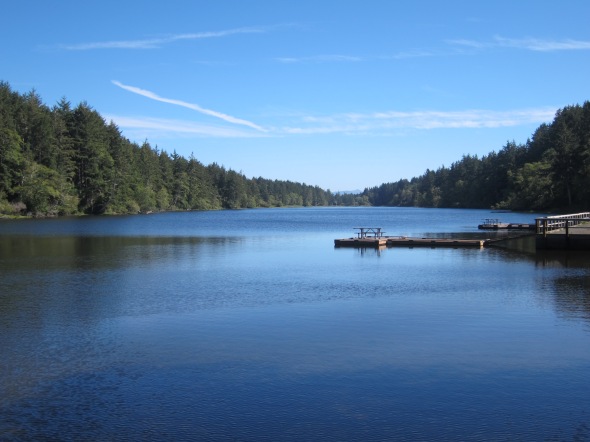
Wrong. My thirteen-year-old son had already leapt from the dock five times, and was treading water, begging me to jump in. He’s not going to be thirteen forever, and it probably won’t be long before he prefers someone else’s company over mine. So, I stood on the edge of the dock, braced myself for the shock of cold, and jumped. As I plunged down eight feet, I held in a squeal when my foot brushed the slimy weeds at the bottom of the lake, and then launched myself toward the surface. At the top, my son was laughing, enjoying the look of misery on my face. That made me laugh too.
My other son wanted to snorkel, so we got out, grabbed our snorkels and fins, and jumped back in to join him. Visibility was limited to about five feet—deeper than that, everything was masked in dark green. We decided to leave the dock for shallow water where the visibility was better and the water was slightly warmer. There, we saw tiny fish and shells.
My waterbug son, the one who likes to jump off the dock, practiced diving below the surface to retrieve rocks and sticks. He has a mischievous sense of humor, and kept trying to grab my ankles from below to startle me. It didn’t work, but we played a fun game of underwater tag.
He’s a great swimmer. He’s been on a swim team for almost a year now, and has become much more skilled. He has always loved the water, however. When he was little, we had to watch him carefully around pools, because he had no fear about jumping in. He loves the ocean too. As frigid as it is (even colder than the lake), he never seems to feel the cold as he boogie boards or body surfs. He never seems to tire either, fighting the waves.
I love the water too, and I’d much rather swim in a cold lake with my son than sit on shore watching him have fun without me. Even if doing that means executing an undignified cannonball from the dock. Who cares if I don’t act my age? Dignity is overrated, and there was a bowl of soup waiting for me at home to help me warm up.
© Melissa Eskue Ousley 2016
The Smart Mouth Book Club

When I was first invited to join my book club, I hesitated in saying yes. I adore the friend who invited me—she’s a librarian and has impeccable taste in books. We had several mutual friends who were also members, so I knew I’d have a good time, but I was thinking about my long to-be-read list, which includes a tower of books precariously balanced on my nightstand and quite a few novels on my bookshelf. Did I really want to commit to reading a prescribed book each month when I had so many other books I wanted to read? What if I didn’t like the selections?
In spite of my initial misgivings, I’m glad I joined. We’re a casual, low-pressure group. Nobody gets flogged if they don’t finish the book. We’re also democratic—we take turns picking books and hosting. And, we love food. Everyone brings a dish when we meet. Sometimes, if a book is food-oriented, someone will make an entrée or desert inspired by what we read. There’s no pressure over food though, which is nice. Some of us love to cook. Others (like me) prefer eating over cooking, so hanging out with talented cooks is a definite perk. Sure, sometimes I like to bake, but my good friend Costco makes a great apple pie, so why go to the trouble?
Besides sampling new recipes, we’ve gotten to read books we wouldn’t have chosen ourselves, or that we’ve always wanted to read but haven’t. We’ve been diverse as far as genre: historical fiction, humor, mystery, romance, memoir, fantasy, science fiction, and most recently, non-fiction. We just finished reading Wealth Woman, by Deb Vanasse, which is about a Native woman who was a prominent figure in the Klondike gold rush. I loved the book because it offered an alternative historical perspective. Since the author is local, we invited her to join us for our meeting. It was great to hear more about the book and her writing process.
 This is the second time we’ve had an author join us. The first time we hosted an author, we met with Holly Lorincz, author of Smart Mouth. This award-winning book is about a young woman’s first year as a teacher and debate coach at a small coastal high school. We had such a great time with Holly, we decided to name our group after the book. It seemed fitting, given that we all have an appreciation for humor and speak sarcasm fluently.
The socialization has been beneficial too. As a writer and an introvert, I spend a lot of time in my own head. Sometimes I get so immersed in writing, I forget to open the shades—I’m pretty sure my neighbors think I’m a vampire. Getting out of the house is a good thing for me, especially among people who love books as much as I do.
© Melissa Eskue Ousley 2016
Haunted Mansion?

One of the things I love about Astoria, Oregon, are the old houses. With its many Victorians and steep, hilly streets, Astoria reminds me of a smaller version of San Francisco. The most famous house in Astoria (besides the Goonies house) is the Flavel House. This Victorian mansion was built in 1884-1885 by Captain George Flavel, an important bar pilot on the Columbia River. Both the interior and exterior are gorgeous, and the house is worth a visit to see the architecture and learn about the history. It is rumored to be haunted by the captain, but the house is more interesting than creepy. Perhaps it would be more frightening if you were there alone, after dark.
There is another Flavel house in town, almost as famous as the captain’s. It was built by his son, George Conrad Flavel, who was also a captain. Built in 1901, the Colonial Revival-style house has wonderful views of the river and beautiful stained glass windows. After George Conrad Flavel’s death in 1923, his son Harry M. Flavel inherited the house, where he lived with his wife Florence and their two children, Mary Louise and Harry S. Flavel.

Although the second Flavel house is not rumored to be haunted, it has a dark history. At age 20, in 1947, the younger Harry allegedly attacked a neighbor with a hatchet. After that incident, Harry and his mother and sister were rarely seen in Astoria, becoming recluses in their own home. Years later, in 1983, Harry S. served time for stabbing a man. When he was released from prison after seven years, he and his family disappeared from Astoria. For twenty years, the house remained abandoned and derelict until the city of Astoria claimed the property. With signs of neglect and boarded up windows, the house certainly looked haunted, even if it’s not.

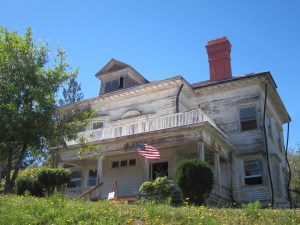
There is a happy ending to this story, however. In 2015, the house was sold to Greg Newenhof, co-owner of Astoria’s City Lumber Company. Since taking possession of the house, Mr. Newenhof has begun restoration, a long process to bring the house back to its former glory. In a partnership with the Clatsop County Historical Society, Mr. Newenhof recently opened his new home to the public, offering tours. Hundreds of people bought tickets. I was one of them—like the other visitors, I’d been interested in this house for years, and was so excited to finally be able to see the inside.
I wasn’t disappointed. The house has gorgeous historical details—paneled walls in the dining room, carved pillars in the sitting room, a beautiful fireplace in the living room, and marble sinks in each of the four bedrooms. My favorite room was the attic, because it still held some of the Flavel family’s belongings: an empty cradle, a tattered jacket, a drum, and old books.

One of the reasons I wanted to see this house is it served as inspiration in my novel, Sunset Empire. I imagined one of my characters, Phantom, living in the house with his mother. To tour the house, and look out the windows at the Columbia River as I imagined my characters doing, was absolutely thrilling. It will be exciting to see the evolution of this house as Mr. Newenhof restores it. I hope he hosts a second open house when the renovations are complete.
© Melissa Eskue Ousley 2016
Stuff, Part II

Last night we placed a blanket on our lawn and watched the Perseid meteor shower. We had a good view on the Oregon coast—clear skies and no light pollution. Even though my boys are thirteen and already too cool for some of the things they used to enjoy, we all felt a sense of awe watching meteors leave brilliant trails of light on a black velvet sky.
 I love these moments. I know we’re too plugged in most of the time, each of us in our respective corners of the house. We’ve been better about unplugging this summer. One of my sons goes to swim practice four afternoons a week, so my other son and I committed to taking the dog for walks on the beach during that time. It’s been a good investment, if only for the chance to have deeper conversations with each other. We’ve enjoyed small discoveries—interesting rocks and shells, sculptural pieces of driftwood, washed-up jellyfish and isopods, and sculpin swimming in the estuary. One afternoon we didn’t walk at all, but stood mesmerized as we watched a whale breach over and over. It’s been good for the dog too, getting regular exercise. She’s a better dog for it, and we’re better people.
Even though my other son hasn’t been a part of our walks on the beach, we’ve included him in unplugging experiences too. We tried new restaurants and went roller skating a couple of times. He loves to read, so we’ve made weekly trips to the library. It’s been a great summer.
A complaint I’ve often heard about my boys’ generation is they can’t function without electronics—they always have to have a device in their hands, and they never go outside to play. They’re not social. They have no imagination. This is not true.
While my kids don’t play outside as much as I did, and they do love their phones and computers, that doesn’t mean they don’t like the outdoors. They do. Sometimes they just need a reminder to unplug, as do I.
They do have imaginations, and use them to create all kinds of art. Sometimes that art is made using pencils and paint, other times it involves a virtual canvas. They problem-solve constantly, whether it’s building worlds in Minecraft or solving puzzles in online games. They learn all the time. If they can’t figure something out, they research it using online resources. They watch videos about science experiments as well as silly stunts. They learn social skills, working with friends to win games. Yes, they are chatting over a distance, but they are still communicating. They talk to their friends in person too.
I think the biggest difference between their generation and others has to do with stuff. It’s not that my children don’t enjoy material belongings, but what they value is often virtual. They are not into physical toys. They still receive them as gifts sometimes, and they do play with them, but the enthusiasm is not the same as for online games.
When they were little, they enjoyed toys more. They had stuffed animals, legos, cars, dinosaurs, even toys they could ride. We had a lot of fun playing together, but every year we’d sort through the toys, passing along older toys to make room for new ones. Somehow we ended up with entire collections of Happy Meal toys—the other day I found one under the seat of my car. We got rid of boxes of toys and clothes before we moved 1,500 miles from Arizona to Oregon, but still, we had boxes and boxes that made the journey. In third grade, the boys’ teacher mentioned a project to give toys to other children. To my surprise, my kids were eager to participate. We went through their closet and collected five boxes of toys to give away. I was proud of my boys’ generosity, and amazed by their ability to let go of material belongings. It inspired me to go through my closet too. Letting go of my own belongings was a relief—it made me feel less weighed down. I wish I’d done more purging before we moved all those heavy boxes across the country.
Virtual toys are certainly lighter than physical ones, and they take up less room. I love that my boys don’t go crazy when we visit stores, wanting to buy more stuff. They see things they like, but they weigh the costs of purchasing them. They have learned to save their chore money for things they really want. This year one of my sons has made three major purchases with the money he’s earned: a video game, a fish tank, and a ukulele. The other, who hardly ever spends money, has only bought two items: a video game and an ocarina, which is a small, ceramic wind instrument.
The only problem with the boys not being into physical toys is gift-giving. While my husband and I know what games they’re into at the moment, it’s hard to translate this for relatives who are shopping for birthday or Christmas presents. To me, it feels selfish to ask for a gift card or cash even though the boys’ interests are so specific I know it will be nearly impossible for someone to find the exact gift they’ve been wanting. Asking for that feels like a demand, even though I prefer gift cards because they don’t take up space and they save on shipping costs for the giver. I also feel we shouldn’t make demands about the amount spent—it’s about being thought of by the giver.
I actually wish people wouldn’t give me gifts at all—just send me a note with kind words or give the money that would have been spent on a gift to a charity. I have everything I need, and the few things I want, I tend to buy for myself. I have more than enough. I know it’s not fair of me to force that idea on other people, however—on my kids or the people who give them gifts.
I don’t have an answer about how to handle the gift issue except to make gentle suggestions to givers and to teach my boys to be grateful receivers. And to periodically go through our stuff and pass along what we no longer need.
© Melissa Eskue Ousley 2016
That Was Then, This Is Now
This week my thirteen-year-old son remarked that the U.S. presidential election is a lot like Pokémon Go. “How’s that?” I asked.
My son explained that two of the Pokémon teams, Valor and Mystic, are at war. “I’m biased,” he said, “because I’m in Mystic. Not to be ‘team-ist’, but Valor acts more like the Republican Party and Team Mystic acts more like the Democrats.” He went on to tell me a story he heard, where a restaurant owned by members of Team Valor gave Valor members a discount while charging members of Mystic more. “But to be fair,” he said, “there are examples of Team Mystic doing that same thing.”
“So what do you think about that?” I asked him. “Is it fair for one team to charge members of another team more? What if the restaurant were owned by white people and they gave discounts to white people, but charged black people more?”
“That wouldn’t be fair,” he decided. “That would be racist.”
This is not the first time we’ve talked about racism (or other social justice issues). This election year has not been pretty. No, it’s been pretty horrifying at times, but I have not shielded my kids from the ugliness. Instead, we talk about the things we hear candidates say and how those things could affect our country.
My sons are growing up in a different world than the one I grew up in. When I was in middle school twenty-something years ago, it wasn’t uncommon to hear racial slurs from my older relatives. I lived in a small town in Arizona, not far from the Mexican border. I’d estimate a third of my classmates were Latino. Some were new immigrants to our country, some came from families who had been U.S. citizens for several generations. I don’t remember thinking about race much—my classmates were simply my friends—until it was brought to my attention. One message I heard from a family member was I shouldn’t date boys from other races because if we ever had kids they’d be “mixed-race children” and wouldn’t fit in with society. Now I have a nephew who is bi-racial, and while I’m not naïve enough to think he’ll never experience racism, I truly hope he’ll live in a better world than the one I knew.
I had friends in high school who I later learned were part of the LGBTQIA community. Even though I knew gay people existed in the world, I didn’t know much about them or the issues they faced. At the time, I had no idea there was diversity within the LGBTQIA community, that people identify in different ways. Looking back, I understand why my friends had to keep that part of their identity secret. Coming out in a small town like mine was dangerous. At best, you would have been ridiculed and shunned. At worst, you might have been beaten or killed.
I recognize that my children and I are privileged. We’re white, heterosexual Christians. No one questions our race, sexuality, or religion. We’ve never had our citizenship questioned. None of us have disabilities, so we have not been ridiculed or patronized for that. No matter how much we discuss social justice in our home, my boys still have more privilege than other people in society, and while they can be allies, there is no walking in other people’s shoes. Not really. My children can have empathy and be educated on issues, but there is no educational experience that will make them understand how much privilege they truly have.
Still, I’m hopeful about their generation. My kids were in pre-school when our first black president was elected. They have no memory of a president before Obama. They have had friends of all different races, and even some from different countries. They’ve had teachers and role models who identify as LGBTQIA, and they are aware that some of my friends are members of that community. They accept all of these people as family and friends—as equals. It’s that simple for them.
My boys see the ugliness of the election for what it is—bullying—and they know bullying is wrong. They speak up when they see bullying happen at school, and they and their friends stand up for classmates.
So, as worried as I feel about the outcome of this election and the thought that electing Trump could negatively affect the lives of friends who aren’t white, or heterosexual, or Christian, (among many other concerns I have about his policies), I’m not worried about one thing. I believe my sons’ generation will hold to their values of accepting and respecting others. They will be resilient, no matter who becomes the next president.
By the way, I asked my son what he thought about having a president who was a woman. He shrugged. The idea wasn’t novel. Why would it be? He’s known teachers, principals, dentists, and doctors who were women. Both of his parents have doctoral degrees. His grandmother served as mayor in our hometown. In his mind, a woman can be whatever she wants to be. When I was growing up in the late twentieth century, the idea of a woman as president was frowned upon. Know what? I like the twenty-first century better.
© Melissa Eskue Ousley 2016
 MELISSA ESKUE OUSLEY