Phobia

A friend in my book club recently reminded me that my tastes in books and movies run a bit darker than most folks’. I laughed, thinking my tastes are different in other areas of my life too. Growing up, I don’t remember my family ever having ham or turkey at Christmas. We might have, but it seems like we always had enchiladas instead, and that suited me fine. I like my food spicy and my books spooky.
Having said that, I’m excited about the It reboot, featuring Bill Skarsgård as Pennywise. From what I’ve seen so far, it’s going to be fantastic. The book is amazing, and by that I mean it’s one of the most terrifying novels I’ve ever read. It hooks you from the beginning as you follow poor little Georgie Denbrough, racing after his paper boat as it goes down the storm drain. I’m fairly certain we won’t be reading It in book club. I don’t want to be responsible for triggering someone’s coulrophobia.
To my knowledge, I don’t have any phobias. There are things that scare me, sure, but not to the extent I become incapacitated. I’m not afraid of heights, but I have a healthy respect for guardrails and I don’t take stupid risks. I love roller coasters and water slides. I’m not terrified by sharks, but I get that some of them are dangerous. Even so, I want to go cage-diving with great whites.

Mouse spiders: free pest control.
I’m not even scared of spiders, which really annoys my family because I usually let the spiders in our house live, so long as they’re not venomous. We have a lot of spiders on the Oregon coast, but few dangerous ones. Some of them, like zebra spiders with their striped abdomens, could even be considered cute. I know—most of you find them revolting. We’ll have to agree to disagree though, because I like the way my little friends devour mosquitos. As long as they do their job and don’t want to snuggle, I’ll grant them a stay of execution.
My greatest fear is something bad happening to people I love. I’m also frightened of demagogues. And angry mobs. Beyond that though, I like the adrenaline rush that comes from being frightened. I guess that’s why I write scary scenes in my books.
I like watching horror movies, but the jump scares always get me, even when I suspect they’re coming. Still, I’m cool with gore, especially if it’s campy. The one subgenre I’m not fond of is demonic possession—those movies tend to give me nightmares. I’ve never watched The Exorcist all the way through. (Well, I have, but I covered my eyes for some of it.) I don’t play with Ouija boards either. I believe demons and predatory spirits exist, so to me it’s common sense not to dabble in that stuff. Better safe than sorry, right?
But back to clowns…am I afraid of clowns? Not really. Do I find them disturbing? Yes. Partly because of Pennywise, but also because there’s something horrifying about someone hiding behind a mask, whether it’s an actual mask or face paint. I don’t like mimes for the same reason. When people cover their faces, their features are disguised, making it difficult to read facial expressions. Their identity is disguised as well. You don’t necessarily know who you’re talking to. (Which, of course, is the same problem with Ouija boards.)
When I was a kid, we attended a local festival every fall, watching a parade. Clowns would march near the spectators, handing out stickers and candy. There was nothing overtly scary about them except they were strangers, and there was something frightening about talking to a stranger, even if they were being nice. I never quite trusted them, particularly if they were the kind of clown who felt it was a personal challenge to get a quiet kid to talk. I didn’t like going to see Santa either. I liked the idea of Santa Claus, but even as a kindergartener I could see the man in the suit wasn’t the real Santa. He couldn’t fool me, and I wasn’t about to sit on an imposter’s lap.
Years later, when I worked as a counselor, I had colleague who loved clowns. She volunteered as one, and her office was filled with paintings of clowns. She probably had twenty of those paintings adorning her walls. One time, she invited me in to talk over a case. I sat there, trying to focus on our conversation, but all I could think about were those clowns. What did her clients think of her décor? Did they find it as disturbing as I did?
I figured the woman had never read It, but Pennywise wasn’t the only evil clown out there. Had she never heard of John Wayne Gacy, the serial killer who sometimes dressed as a clown? To me, that seemed like reason enough to go with a different design theme, but I guess my mind went to a darker place than hers.
Clearly, our opinions on clowns were polar opposites. I wonder what she thought about spiders.
© Melissa Eskue Ousley 2016
So, You Want to be a Writer…
Sometimes I get questions from readers, and I enjoy answering them. I know a lot of you out there are into writing, so I think you’ll find this interesting. Here’s the question and my answer.
“I have a question for you since you are a published writer. Was it hard to get your work published? How did you decide on genre? I would like to start writing and just didn’t know how to get started.”
Well, when I began this journey, I wasn’t sure how to get started either. I was an avid reader, but I knew nothing about the publishing industry—how the process works, how to query an agent, how presses choose what they will publish—none of that. I’ve been doing this for a number of years now, and I’ve learned a lot of hard lessons. I still don’t have all the answers, but maybe what I’ve learned will make your path easier.
I started writing because I had a story in my head and I wanted to see how it would play out. I can’t say I set out with genre in mind. I was simply writing the kind of story I wanted to read. I wrote a fantasy story with a teen protagonist, so my books are classified as young adult fantasy. At some point, the story took shape and became a novel, and I thought I’d attempt to get it published. Thus began years (YEARS!) of querying agents. Scary, right? Okay, stay with me—don’t get frightened away just yet.
One thing I did correctly is I finished the novel before sending out queries. This is important, because if an agent likes your fiction, they will want to read the whole story. If you don’t have a completed manuscript, game over. (For non-fiction, it’s different. You query with a proposal which may include an outline and sample chapters, depending on the agent’s submission guidelines, and the book does not have to be finished.) So, step one, finish your story.
How do you get started? Begin with short stories or with characters in a scenario, and write every day if you can. Try for an average of 1,000 or more words a day. If you do that every day for three months, you’ll have a novel of 90,000 words. (A note on length: 80-90 thousand words is a good range for a book, depending on genre.) It may take you more than three months, because, let’s face it, other obligations get in the way. But keep going. Don’t worry if it sucks. That’s what revision is for. Finish that first draft.
While you’re working on your book, read as much as you can. Read books similar to yours. Read books that are different too. Think critically about what you read, noting the choices an author makes. Think about what works and what doesn’t. Read books on the craft, and challenge yourself to do better. My favorite writing book is On Writing by Stephen King. It’s a practical and entertaining read, and the guy knows what he’s talking about.
Step two, edit your story. Polish it as much as you can, then give it to a beta reader for critical feedback. After reading your book a number of times, you’ll no longer be able to see the typos. Find somebody smart to give you an honest critique, who you trust to have your best interests in mind. Somebody who can be brutal, but who you’ll still talk to afterward. I have friends who do this for me, people who I respect deeply, who are intelligent and can tell me the truth, whether I’ve got a plot hole or my fly is down. You might also consider hiring a professional editor. The cost is worth it. I truly believe that without my editor, my work wouldn’t be as strong, and I wouldn’t have found a publisher. Another option is to join a writing group. Your fellow writers can give you feedback on your writing and may have insight into the publishing industry.
Your book needs to be as strong as it can be before you send it to agents or publishers, because if your sample pages have too many errors, they will get annoyed and stop reading. Agents get thousands and thousands of queries. Publishing is a competitive industry. If you want to get through the slush pile, your query letter and sample work need to be free of errors and compelling enough to keep them reading. Great writing doesn’t guarantee a contract, however, so don’t take rejections personally. Even if you write beautifully, the agent has to be able to sell your work. Sometimes they love your concept, but there’s no market for it.
That doesn’t mean you should give up. If you really want to do this writing thing, keep going. Research the industry—what type of books agents represent and how to write an effective query letter. Two good resources for this are WritersDigest.com and BookDaily.com. I also recommend reading How Can I Find A Literary Agent?: And 101 Other Questions Asked By Writers by agents Chip MacGregor and Holly Lorincz. It’s full of practical advice to help you as you query. In the meantime, you can keep writing, working on your second book, right?
Do you need an agent to get published? No, but most large publishing houses won’t review your work without one. You can also publish your work independently, not going with a publisher at all. The advantage to that is you make all the choices about how your book will look, and you keep the profits. The disadvantage is the market is flooded with independently published books, and without exposure and a distributor, your book won’t be on shelves in stores unless you do the work to get it there. (I’m oversimplifying for the sake of brevity here—the process for getting books in stores is complicated.)
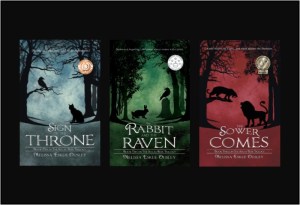 So how did I get published? I went a different route. I attended a local writing conference called Summer in Words, which I highly recommend if you’re in the Pacific Northwest. There, I met a publicist who also serves as a book shepherd. A book shepherd functions like an agent, except instead of working with an author long-term and on commission, the shepherd sends out proposals on your behalf for a fee. Our proposal package consisted of a description of my book, my bio, a list of comparable titles, sample pages, and a marketing plan. We sent it to ten small publishers who did not require representation by an agent. One of them offered me a publishing contract for my young adult trilogy.
I’m grateful to all the people who helped me get published—beta readers, my editor, my book shepherd, my publisher, other authors who mentored me…I’ve learned much through the process. I’ve learned about the industry in marketing my books and in working as an editor for another press. It’s interesting to be on the other side, to be the person critiquing submissions. You gain insight into what works with queries and what doesn’t.
It’s tough to get published. Believe me, I know. I’m in the trenches with you right now. I’m still looking for representation by an agent, but I get more requests for full manuscripts than I used to, so I’m getting closer. I’ll keep you posted if I get an offer. I still have a lot to learn, but I’m hopeful I’ll find the right publishing home for my new books. I’ll keep going, and if you want to get published, you keep going too. Don’t give up.
I hope that answers the question. If you have more questions, send them my way. I’ll help if I can. Best of luck.
© Melissa Eskue Ousley 2016
Thirteen

I now have teenagers. Somehow this is not as scary as I thought it would be.
That may be because I’ve worked in mental health, helping kids, so I’ve seen teens in heart-wrenching situations. I knew a girl who got pregnant at twelve and had a baby at thirteen. That baby is nearly grown now—I hope she had a better childhood than her mom did. I knew a kid who was hooked on meth by the time he was a teen, and another who tried to kill herself with a shotgun blast to the stomach when she was in middle school. So…yeah. The bar for shocking me has been set pretty high.
I’m not a perfect parent, but so far, my twin boys have turned out to be amazing people. They are smart and funny and kind. They are sweet to animals and loving to their parents. They are loyal to their friends and brave enough to speak up if they see someone being bullied. They set goals for themselves and do well in school. I can’t complain at all (even if they remind me I’m not as cool as I used to be because the latest slang is a mystery to me or I’m clueless about dance moves).
I’m thankful to have good kids. Really, I’m thrilled to have kids at all. Back in my twenties, it looked like that was never going to happen. I was diagnosed with polycystic ovary syndrome, which is a nightmare if you want to have a biological child. It’s a horror show for other areas of your life too, wreaking havoc on your endocrine system, but the disease is cruelest when it comes to fertility. This doesn’t say much for my character, but I’ll be honest: working in social services with people who didn’t want to be pregnant was tough when I wanted a kid and couldn’t have one. Still, the hardest part of having PCOS was the shame. Talking about infertility was taboo, and yet, I was at an age where everyone wanted to know why I hadn’t had kids yet. Didn’t I want children? I felt like I was under a microscope with all the intrusive questions and comments I received from people who likely meant well. I felt broken.
Then came the day I found out I was pregnant. Staring at the little blue lines that finally appeared on the pregnancy test felt miraculous. Finding out I was having twins felt too good to be true. I was terrified something bad would happen, that I’d have a miscarriage. We didn’t tell anyone but our family for a long time because I was scared we’d jinx our good fortune.
Confined to bedrest the week before my boys were born, I remember watching fireworks outside my hospital window. That July there was a forest fire, and the mountains around Tucson flickered with orange light, a show to rival Independence Day festivities. Then I had two new people in my life. I remember how miraculous it felt to finally see their tiny faces, how surreal it was to know life would never be the same.
There was more fear when we learned that one baby had been born healthy but the other would have to stay in newborn intensive care. We didn’t get a serene, post-birth moment of bonding. We got a machine, pumping air into my son’s fluid-filled lungs, keeping him alive. We bonded with him as best we could in the hospital, knowing he might not make it, while feeling grateful to be able to take at least one of our children home to live with us. We did a lot of praying. Over the following month, we drove back and forth to the hospital to see our sick baby, while taking care of our other newborn.
This was not an ideal way to start out as a new parent. Between our daily trips to the hospital, I had a lot of guilt about not being able to give either of my children the time or attention I wanted to give them. Things turned out better than they could have though, and for that, I’m thankful. My son did live, and now he’s a healthy, broad-shouldered kid who towers over me. My other son is almost as tall as I am, and often reminds me that he too will soon outgrow me.
 The other day I found a bunch of videos of my sons as toddlers, much to their embarrassment. We filmed everything because we were so happy to have children.
One of my favorite videos is of them at age two, playing board games. Operation was a big hit, sending them into fits of giggling every time the buzzer went off. I know I’m biased, but it’s adorable. We also played Jumanji—after watching the movie—which pretty much scarred one of my sons for life. There’s video of him hiding under a chair as his dad reads a card about a hailstorm. (Bad parenting, but darn cute.) The other son (the one who had such a rough start to his life) loved the game. He thought the idea of a rhino crashing through our house was marvelous. He wouldn’t have objected to a rampaging elephant either.
So now my boys are thirteen. Time has gone by too fast, but I’m so thankful we’ve had this time together. We’ve got a few more years before they’re off to college, and I’m grateful that we’re close, that we still take walks together on the beach and talk about our favorite books. I know there are a lot of changes coming, and with those changes, new challenges. I hope, no matter what happens next, they always know how much they are loved.
© Melissa Eskue Ousley 2016
Tellin’ Stories

When I was a kid, my grandmother never outright accused me of lying. Instead she’d cock her head, look at me with a mischievous twinkle in her eyes, and ask, “Are you tellin’ stories?” My mother’s mother had a number of endearing habits. She said the word wash like warsh and fish like feesh. Her white hair was an adorable dandelion fluff, and she wore an old-fashioned apron when she cooked, sneaking me treats. She was pretty cute when she cursed too. I’m one of those people who think it’s hilarious when elderly people say naughty words, but it wasn’t just that I found her colorful language amusing. It was because I could see her when she did it—not her as an old person, but her as a person. I remember catching glimpses of her when she was moved to a nursing home after suffering a stroke and losing most of who she had been. It was close to Valentine’s Day and she and the other residents made construction paper hearts during craft time. I asked her if she was going to give her valentine to my grandpa. “Depends on how he acts,” she said. What a character.
I suppose writing, or “tellin’ stories” is a socially acceptable form of lying. Some would argue it’s also a form of mental illness, considering all the characters who live in a writer’s head. If that’s true, I don’t want to be sane, because I’ve come to believe that the characters are always right. That is, when I let the characters take charge and drive the story, it turns out much better than my original vision. I don’t always know the ending, and sometimes my characters surprise me, but that’s when things get interesting. Sounds crazy, but it’s true.
I don’t remember when I first started telling stories, but I do know I started by telling them to myself. Like a lot of little girls, I had dolls when I was growing up. My favorite dolls were mermaids and fairies, not Barbie. I remember going on a long road trip with my family and telling myself stories in my head, acting them out with dolls as I watched the landscape change from dry desert to green fields. I don’t remember the stories, or even where we were going, but I remember what it felt like to tell the stories, the excitement of watching a scene play out in my imagination. I had a set of Disney paper dolls—Cinderella and Prince Charming, Peter Pan and Wendy, and many more. They too played a part of my inner world, though never in their prescribed roles. I gave them different names, different relationships, different stories.
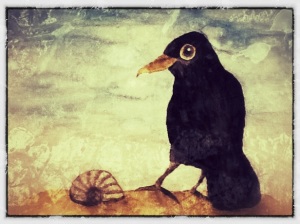
In school I was easily bored, and after finishing my assignments, I’d draw. Most of those stories featured me and my friends on wild adventures with mythical creatures, sometimes inspired by books I’d read, sometimes inspired by dreams. I’m not embarrassed to admit I drew stories even in high school. I wasn’t the best artist, but the habit kept me entertained, and kept me out of trouble. Without those stories to sustain me, I don’t think I’d be who I am.
These days I tell stories with words rather than drawings, but the experience is much the same—losing myself in another world, seeing things through my characters’ eyes. I don’t always know where the stories come from, but I suspect they stem from a desire to escape reality. Reality is so often dreary and boring, isn’t it? Where’s the adventure in normality? Doing what everybody else is doing requires no daring.
I like to ask “what if” questions. What if stray cats were really goblins in disguise? What if sea monsters did exist? What if that seemingly benign fixer-upper really was haunted? Once I have an idea and can see the world as my characters do, the story gets rolling and the fun begins.
© Melissa Eskue Ousley 2016
Open for Business

You all know that writing is my passion. Books are my life. I have a book with me everywhere I go—either one I’m reading or one I’m writing. I usually have a notebook with me so I can write while I’m waiting, whether I’m in a dentist office or the auto shop.
What you may not know is I’m also passionate about helping other authors. For over a year now I’ve been contributing monthly articles on writing, editing, publishing, and marketing to BookDaily, an online organization that provides resources to authors and helps them promote their books. I’ve also served as an editor for Barking Rain Press, helping wonderful authors birth books. This spring I taught a publishing and marketing class for a local college, and I absolutely loved working with students to talk about publishing options and create personalized plans for book marketing.
Because I found these experiences to be so rewarding, I’ve decided to embark on a new adventure. I joined the Editorial Freelancers Association, and I’m opening up shop, providing editing, writing, and other services. Check out my Writing & Editing Services page if you’re interested in seeing what’s new.
I’ll still keep writing, of course, and I have quite a few ideas for new books. But, I really want to help other authors too. I know how hard it is when you’re first starting out as a writer, and I know I made a whole lot of mistakes when my first book was released and I was trying to market it. If I can, I’d like to help other authors have a smoother journey than I did.
If you’re an author needing assistance, let’s talk. I look forward to helping you.
© Melissa Eskue Ousley 2016
Go Jump in a Lake

I struggled with what to blog about this week. If you’ve been paying attention to the news, the past two weeks in this country have been full of darkness. Between the Stanford rape case and the shooting in Orlando, there’s a lot I could write about: anger about a minimal sentence for a horrific sexual assault, frustration that rape victims are so often second-guessed and blamed, sadness at the loss of 49 lives in yet another mass shooting, fury at those who use religion as an excuse to harm LGBTQ people (and I’m not thinking about Islam here as much as I’m thinking about some of the comments I’ve seen from fellow Christians). I’ve cried for people I don’t even know. I’ve felt hope seeing people come together to show love and compassion to those who are hurting and to demand change so these terrible things don’t happen again.
I started to write about these things in depth, in an attempt to make sense of the evil in our world, to somehow express the emotional turmoil I’ve felt. Then I took a walk.
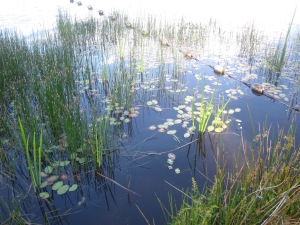
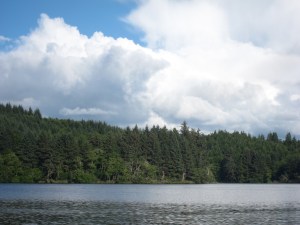 Today was the last day of school, and to celebrate, my twelve-year-old twin boys invited over three friends. The six of us walked to a local lake–the five of them, chatting happily about all the things kids that age talk about, and me, tagging behind just a little bit, watching them, marveling at how untouched by darkness they still are. How they joke and laugh and scream with delight when they jump into a cold lake. How they splash each other and play catch and see how high they can swing when they finally get out of the water to warm up in the sun. How they get excited over seeing a fish swimming next to them.
I need this sometimes, this silliness and joy. To witness all the life in these kids—pure and full and beautiful. I need this so I remember how much light there is, even when there’s so much darkness.
© Melissa Eskue Ousley 2016
Cool
When I was twelve I thought I was cool because I learned how to ride a motorcycle. My uncle Dan, who is a few years older than me and has always been more of a cousin than an uncle, taught me. He was cool because he was in high school and had his driver’s license. Me, not so much. I was just a skinny kid with holes in the knees of her jeans and a fondness for climbing trees and building forts.
One time when I was staying at my grandparents’ house, my uncle took me for a ride on the back of his dirt bike. We went off road, to this cattle pond at the bottom of a pit. It hadn’t rained for a long time, so there wasn’t any water and the mud had dried out, leaving the surface fractured like puzzle pieces. With the engine idling on the edge of the pit, Dan asked me if I wanted to go down there. I looked at the steep incline we’d have to drive down and said no. “Okay,” he said, ignoring my protests, “Hold on.” I wrapped my arms tight around his waist and off we went. It was a whole lot of fun until we got to the middle of the pond. It wasn’t quite as dry as we thought. The first two inches were a dirt crust, and below that was a foot of mud. The bike sank, and we had to wade out, walking the bike.
We got back to solid land, hopped on the bike, and sped off toward home. The problem was the bike didn’t have fenders, so all that mud spinning off the back tire flew up at me. By the time we got to the house, my back was covered with mud, my hair plastered in filth. Grandma was mad. “How did she get so dirty?” she yelled at my uncle. I thought it was hilarious.
My grandpa let me ride the bike on my own. The only real warnings he gave me were to watch out for the tailpipe, so I didn’t burn my leg on it (I did, and one time was all it took for me to avoid it from then on) and to use the brake. Once, I panicked when the bike got going too fast and I forgot where the brake was, so I just put my feet down and let the bike go. That was a bad idea, but better than crashing. My legs got scraped up, but my head was okay. I think someone, probably my mom or dad, told me to wear a helmet. I remember putting one on, and having a hard time seeing because it was too big. I don’t think I wore it after that.
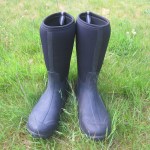
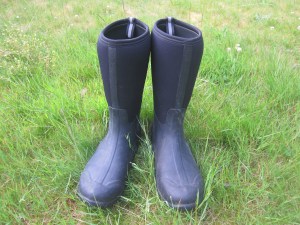 What I did wear were my grandpa’s aviators and his black, rubber irrigation boots (like galoshes but for farmers). Paired with cutoff jeans and my favorite pink shirt* (which read, Girls can do anything boys can do—better!), I made quite a picture, I’m sure. I wore the boots (several sizes too large) because the bike bled motor oil, and I wasn’t supposed to get the sneakers I wore to school oily. Instead, my chicken legs got splattered as the oil ran down into the boots. Still, there was nothing like feeling my hair flowing in the wind, growing more tangled and stringy every time I circled my grandparents’ house at a thrilling pace of 15 miles per hour.
I imagined I was a real biker, even though the dirt bike didn’t look or sound like a respectable motorcycle. Instead of a thunderous roar, the engine whined. Less Bhah—VROOM! and more Vreee, vree, vreeeeeeeee!
I think all this posturing on my part was meant to impress a cute older boy who lived down the road from Grandma’s. Tragically, I don’t think the he ever noticed. He was too busy doing whatever it is cute older boys do.
*With three brothers, two male cousins, and an uncle who was basically a cousin, I became a feminist at an early age.
© Melissa Eskue Ousley 2016
Misadventure

I don’t bruise easily. That’s not bravado talking—I’m really not a bleeder. It’s a problem because when I go to get my blood drawn every six months, it’s a real pain in the rear. Every time, I have this talk with the phlebotomist about how my veins like to play hide-and-seek (mostly hide), and how the best bet is to just take it from the top of my hand. Usually the person gives me a skeptical look and says, “That will hurt more.” I assure them it’s fine. If I’m lucky, the person listens to me and goes for it. If I’m not, the phlebotomist takes it as a personal challenge to hunt for a vein in my arm and I get poked three or four times before he finally gives up and settles for my hand. Even then, my veins are stingy and the blood flows so slowly I’m warned I might have to come in for a second draw.
This last time the phlebotomist was concerned about my hands being too cold and had me use a hand warmer to get the vein to rise to the surface. “You’re so cold!” she said, rubbing both my hands, looking for possible candidates. “Yeah. Sorry,” I replied. “I guess you can tell people you drew blood from a zombie.” She gave me a courtesy smile and inserted the needle, trying to get my vein to cooperate. (At which point I decided if I ever am undead, I should simply tell the truth rather than hide my identity. No one will believe me anyway.) “Did you drink any water today?” she asked, as my blood slowly dripped into the tube. “Tons,” I told her, nodding at my nearly empty water bottle, the fourth I’d drank that morning. “All I’ve been doing since I woke up is drink and drink and drink.”
The silver lining to not bleeding easily is it is super-duper helpful when you’re as accident-prone as I am. I am forever bumping into the edges of kitchen counters and tables, and never have anything to show for it. One time though, the husband and I decided it would be awesome to take our canoe on a creek that twisted and turned every twenty feet or so. We were kneeling in the boat, paddling like crazy, trying to navigate the curves. Then we hit some rapids and really got going. Problem was, we had too much momentum to make the last turn and ended up slamming into the shore. He was all right, and the boat was all right, but I went flying. My thigh hit the bench in the middle of the canoe. I got the giggles and couldn’t stop laughing, even though I had a bruise the size of a fist on my leg. I don’t know how fast we were going when we ran aground, but our collision had to be pretty darn forceful to leave a mark like that. I wore the bruise as a badge of honor.
Another time I went hiking during Christmas vacation with one of my best friends and his brother, and wore boots without treads. I guess I chose fashion over function, or maybe I didn’t know where exactly we were headed and how treacherous the terrain would be. I quickly recognized I’d made a mistake. My friend wanted to hike down this canyon that had been rubbed smooth by the flow of water. It was a gorgeous place, with pools of water about three feet deep, descending all the way down the canyon to a larger pool at the bottom. I took a few steps and realized the soles of my boots were too smooth to get traction against the polished rocks. Figuring I’d slip and break my tailbone if I tried to walk across a narrow section of rock, I sat down on my rear, intending to scoot along until I could stand without fear of falling. A sensible idea, until I started to slide with no way to stop myself. Next thing I knew, I was standing waist-deep in freezing water. That was the end of that adventure. The guys had to drive me back to where my vehicle was waiting, and I was too stubborn to tell them to turn on the heater. Instead, annoyed at myself, I shivered until I got to my own car, and then cranked up the heat. I refused to let on how cold I actually was during the thirty-minute drive to where I had parked, which I suppose is a good way to die of hypothermia. I survived, mostly unscathed except for my pride. We still laugh about the incident. My friend jokes that it wasn’t an adventure if I didn’t come back soaked or injured. That’s okay. We had a lot of fun on those excursions.
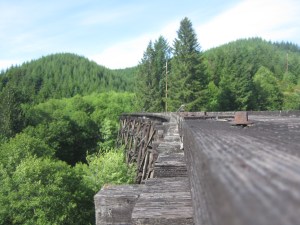
This Memorial Day, I had another mishap. My family and I drove to Vernonia to go hiking. There are fossil beds where you can spot seashells and there is also an abandoned railroad trestle. It’s not the safest thing to walk on because it’s a good 80 feet high, towering over the trees. After taking photos of the trestle from above, I decided to climb down a steep hill to get some shots from below.
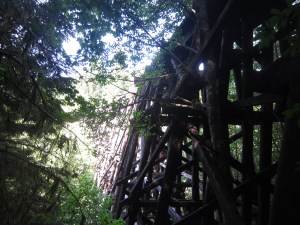
Worth a twisted ankle? Absolutely.
I got down okay, but as I balanced myself at an awkward angle in the loose dirt, I felt pain in my ankle. I ignored the straining sensation in favor of snapping more photos, and then climbed back up the hill. My ankle hurt a little on the hike back to the car, but I didn’t think much of it. I even walked around a bunch the next day, running errands. By the time I was done though, my ankle was achy and swollen. I iced it that night, but it was tender on Wednesday, and I was forced to bind it so I could go to work. I looked pretty pathetic limping around, my ankle wrapped like a mummy’s. Not to worry though—I’ve been babying it since then, and I’m sure it will be better by the weekend. Just in time for my next misadventure.
© Melissa Eskue Ousley 2016
Cursed
Remember the Greek myth about Icarus? He and his father were imprisoned in a labyrinth, and escaped by making wings out of wax and feathers. Then, elated by the success of the plan, Icarus got carried away and flew too close to the sun. The wax melted and he fell to his death. I guess the lesson here is to keep one’s hubris in check. Pride comes before the fall.
I can relate. I try not to be an arrogant person, but I do take pride in my accomplishments. I don’t think that’s a terrible thing because I’m goal-driven, and I try to see the silver lining when faced with obstacles. I consider myself an optimist, continuing to strive in spite of challenges. I’m also a realist—experience has taught me that even though I hope for the best, I should prepare for the worst. Something is bound to go wrong.
Seems like every time I think I’ve got it together, the universe is quick to school me in humility. Case in point, my career as a high school cheerleader. I’m not the most athletic person, so some of the jumps we did were a challenge for me. The pike? Never going to happen. I could do a high kick though, so I came up with this signature move combining a hurdle jump with a high kick. I was pretty proud of myself until one football game, when I performed said jump kick and fell on my butt in front of the entire town. I scrambled to my feet, brushed myself off, and pasted a smile on my face, trying to convince myself that only half the high school saw me wipe out.
I’ve come to believe I’m cursed. It doesn’t matter how many degrees I earn or how many awards I win, if I start to soar too high, I’m sure to crash. I guess the universe doesn’t want me to get cocky. Being an author is a continuous lesson in humility by the way—there’s plenty of rejection to be faced even after you get published, between trying to get reviews for your book and trying to find gigs. To say one needs a thick skin is an understatement. You need a suit of armor.
I once approached a venue about a speaking gig, and got turned down. Three books later, I finally earned enough credibility for the venue to invite me to come and speak. I was excited. I came early, armed with an excerpt to read and books to sign. Unfortunately, fate had other ideas. My name was misspelled twice—my last name on a sign outside, and my first name on a poster inside. I think I’m justified in feeling annoyed about that, since my name was right there on the cover of the book, prominently featured. Nevertheless, I was grateful for the gig, and chose not to say anything.
There weren’t a lot of attendees, so when a woman walked in right before the event was set to begin, I was thrilled. She took one look at me and said, “You’re not Melissa (insert somebody else’s last name here).” Her tone was slightly accusatory, as if she had been duped and it was my fault for not being the expected Melissa. “No, I’m not,” I said, giving her what I hoped was a winning smile. I proceeded to explain who I was and what my talk was about. I then invited her to join us. She let me finish my little speech, and then, without a word, turned around and left. Her abrupt exit was so unexpected and rude, I couldn’t help but laugh. Sometimes that’s all you can do.
Then there was the time I interviewed for a position as a professor. I flew out to San Diego and put on my best interview clothes, a navy jacket and skirt with a cream top, and a pair of expensive leather heels I’d splurged on. The stilettos were killer. They elevated the outfit and boosted my confidence. They were also my undoing.
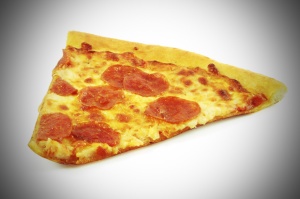 I sailed through the interview, and was feeling pretty good about things when one of the other professors took me to lunch. After that, I was due to come back to campus to make a presentation, so the interviewers could gauge my teaching abilities. We drove to the restaurant in her car, and she parked next to an island dividing the lot. When I got out of the car, I found the woman had parked close to the curb, so I had to step onto the island, which was covered in small plants. I tried to tread carefully so I wouldn’t trample the ground cover, and successfully made my way around the side of the car to where the professor was waiting. We started walking toward the entrance of the restaurant and suddenly, I noticed my foot was caught on something. Someone had tossed a slice of pizza into the low plants, where it was hidden from view, and my stiletto had speared it. As I walked away from the parking island, I dragged the pizza slice along with me. Are you kidding me? I asked the universe, as I frantically tried to keep up my end of the conversation while discretely using the toe of my other shoe to pin down the pizza slice, so I could free my heel. I’m pretty sure the woman noticed. I didn’t get the job.
I don’t know why these things happen. I know bad things happen to everyone, so maybe I’m not truly cursed. The rain falls on the just and the unjust, no? (And of course, things could be worse. Things have been worse, and I keep getting up each time I get knocked on my rear end.) Maybe spearing the pizza slice was God’s way of letting me know that wasn’t the right job for me, that I wouldn’t have been happy on the tenure track. Maybe the challenges I face serve to guide me, to push me in a new direction I wouldn’t have tried otherwise. I just wish I could learn these lessons without damaging my pride.
© Melissa Eskue Ousley 2016
Raven Girl
This is the story as it was told to me by my mother. One morning when I was seventeen months old, she and I went into the backyard of our house in southern Arizona. She was hanging laundry to dry in the warm desert air, and I was standing in my nightgown, my hair in curlers, munching crackers.
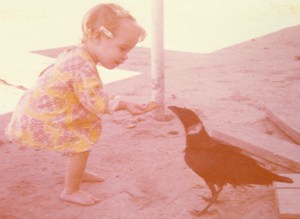 She turned to find me chattering at a Chihuahuan Raven, sharing my crackers with it. In Bible school, I’d heard the story of the prophet Elijah, who took refuge in the wilderness when he was hunted by a wicked queen. Ravens were sent by God to bring him food during his time in exile. I’m not sure how much of the story I understood at that age, but apparently I decided to return the favor, and feed this bird.
I communed with the raven for quite a while, long enough for my mother to run back in the house and grab a camera. The raven, an opportunistic feeder, was intelligent enough to know that a little girl with crackers wasn’t a threat.*
To this day, I feel a sense of awe around ravens, and feed them when I have a spare crust of bread. I still chatter at them too, and sometimes they talk back, in their own way. My early experience with a raven is why ravens and crows are special to me, and why I feature a raven as a character in my fantasy series, the Solas Beir Trilogy.
*If you’re a fan of corvids like I am, check out my previous post, On Ravens. Also, I highly recommend the book, Gifts of the Crow.
© Melissa Eskue Ousley 2016
What We Leave Behind

Go Bag Contents:
1 Hatchet*
1 Frying Pan
6 Rolls Toilet Paper (super important for pretense of civilization)
1 Pack Wet Wipes
1 Can Opener
1 First Aid Kit
2 Camp Forks (not just for roasting marshmallows)
4 Sets Plates, Cups, Utensils
2 Lighters*
3 Fire Starters*
4 Rain Ponchos
2 Swiss Army Knives*
3 Packs Dog Food
4 Mylar Rescue Blankets
1 LifeStraw Water Filter
12 Bottles Water
Dry Goods for 3 Days (note to self: don’t forget pop tarts and top ramen)
4 Missing Persons Posters (plus 1 for dog)
*Not for twelve-year-old boys to use unsupervised. Trust me on this.
Plan for 15 Minute Warning: Grab Go Bag, walk (quickly) to higher ground. Leave dog if necessary.
Plan for 30 Minute or More Warning: Load Go Bag and camping gear (tent, tarp, sleeping bags, flashlights, emergency radio, grill, shovels, etc.) into car, drive to higher ground. Take dog.
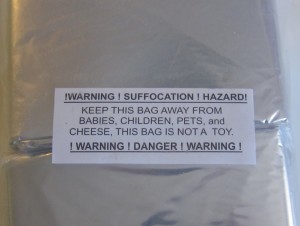
Why cheese? (From the packaging on our rescue blankets.)
In the six years I’ve lived on the Oregon coast, I haven’t felt so much as a tremor. Reality isn’t based solely on my experiences though, and I’d be foolish to assume it does. Our area has a history of earthquakes, so it’s important to be prepared, especially living near a tsunami zone. Emergency management experts for the region say we’re overdue for the big one, an earthquake strong enough to shake the ground for five minutes, causing landslides and a 50-foot high tidal wave. The thought of that is enough to send me into fetal position. Even if the big one doesn’t happen in my lifetime, we’re still at risk for tidal waves originating from across the ocean. That happened in 2011, when there was 9.0 magnitude earthquake in Japan. Fortunately, the waves that reached our shores were small and did minimal damage, but debris from that natural disaster still washes up on our beaches, several years later.
My children regularly practice earthquake and tsunami drills at school, taking refuge under desks for the shaking and then filing out of the building in an orderly fashion to walk up a hill. They know they’ve got about 15 minutes, maybe less, to get to safety, assuming our bridges haven’t crumbled. We know where they’ll be if a quake happens during the school day, and we know where we’ll meet if a different scenario happens, say, they’re at home and I’m at work.
We put together a Go Bag, which is exactly what it sounds like—a bag filled with the essentials we’ll need in an emergency where we can’t stay in our house (earthquake, tsunami, zombie apocalypse, you get the idea). The thing weighs 50 pounds, and it would be tough to carry it alone, but we’ve tried it out and we can all tote it without falling over and kicking the air helplessly like a turtle on its back. If we have a longer warning, we’ve got a plan B, which involves packing more survival gear. We have to assume there will be power outages, and communication will be disrupted if cell towers go down. This is not too scary of an idea though, because every winter we face storms with gale force winds, and we’re used to living days without power.
The most disturbing thing about preparing our emergency kit was creating our own missing persons posters. It was a little like writing your own obituary—a morbid exercise. You have to list your height, weight, hair and eye color, and any identifying characteristics (like birthmarks or scars). That’s so you can be found alive and reunited with your loved ones, best case scenario, but also so your body can be identified if you don’t make it. Like I said, morbid.
Still, we have to assume that one of us could get separated, if somebody is in a different location when the quake hits. We even created a poster for the dog. In an ideal situation, if there can be an ideal in a terrible event like this, we’d have time to get our dog into her harness, or at least attach a leash to her collar, and calmly take her for a walk to our designated meeting point. Odds are, that won’t happen. As neurotic as Gryphon is, she’ll hide under one of our beds the second the shaking starts, and we’ll never be able to coax her out. In that case, we’re just going to have to leave her behind, as heartless as that sounds. We love her, but we can get a new dog. We can’t replace each other. Our piranha, by the way, is toast. The only way Gladiator gets to come along is if he’s dinner.
We’re not really okay with sacrificing the dog and the piranha, but we have to be. We also have to be okay with sacrificing everything else we’re forced to leave behind. I’d love to save family photos, but I just can’t. Maybe, if there’s time, I could grab one or two favorites, but they’ll take up precious room if we’re able to take our car, and there’s no room at all in the Go Bag. Forget about clothing, furniture, or my beloved books—all that is gone in a situation like this. I will grab my lap top if I can, since there are photos on that as well as my works in progress and other information that would be helpful in rebuilding our lives. It’s a sobering thought to look around me and realize all the material goods I depend on—let’s be honest, cling to for comfort—could be gone. But isn’t that going to be the case regardless? I’m not going to live forever, and I can’t take any of those things with me when I die. They’re only material things. What matters—the people I love—those are the things I can’t bear to leave behind.
© Melissa Eskue Ousley 2016
Smarty Pants
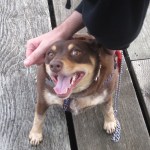
Intelligence is a desirable trait. I enjoy talking with smart people, especially if they have a sense of humor. I thought I wanted a smart dog too, but now I’m not so sure. I joke that the next time I get a dog, I want one that’s dumb and lazy. I’m only partly kidding.
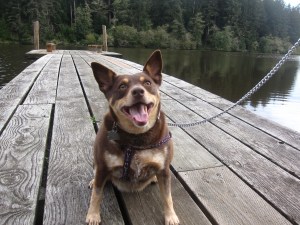 We have a Kelpie named Gryphon. She’s similar to an Australian Cattle Dog, and one of the most intelligent breeds. She’s certainly the most observant dog I’ve ever had, watching us all the time, anticipating our commands. When I get ready to go somewhere, she watches me nervously and then goes to her safe place/bed, her crate. I don’t mean to make her anxious, but I imagine some of my own nervous energy rubs off on her, particularly when I’m running late and rushing around. I try to coax her out of her crate, but to no avail.
She keeps a tight schedule. Around seven each night, she starts getting antsy about going to bed. The humans in our house don’t go to bed that early. If I give in and put her to bed, she gets annoyed that we’re still making noise, communicating her irritation through a series of overly dramatic groans. Bedtime is a ritual. First, she lets me know she wants out by turning circles near the back door. I open the door, and she goes out to do her business. Then she zooms off to bed, waiting expectantly for a treat. If we vary from that ritual, she gets grumpy.
Bath time is another ritual. My husband takes her out to play frisbee in the yard, to tire her out. Then we coax her into the bathroom and close the door, preventing escape. Treats are strategically placed in the tub so she’ll jump in, and then we turn on the water, spraying her back gently so she doesn’t freak out. She tolerates the bath, but she doesn’t like it, and it takes both of her adult humans to keep her calm. Any sudden moves will result in a wet dog leaping from the tub, trying to open the door with her paws, even though she’s too short to reach the handle. Thank goodness she doesn’t have opposable thumbs.
I have no doubt we’re partly to blame for her sense of entitlement, but she was strong-willed from the start. With a personality like hers, she would have been a pack leader. In our pack of four humans, a piranha, and a dog, we’ve had to establish who is dominant, and make sure it’s not Gryphon. She can be incredibly sweet, but she can also act like a toddler, digging in her paws when she doesn’t get her way. There have been times when I have looked her in the eye and actually said, “I am the alpha. Do you understand? I am the alpha.” I’m fairly certain she gets it, though she still pushes boundaries. (And yes, I am that crazy woman who has one-sided conversations with the dog and assumes she comprehends what I’m saying. I know for certain she understands the word treat.)
There are other times when I look at her and wonder if she’s part velociraptor. She’s protective of her family, and sounds ferocious when anyone rings the doorbell. The nice thing about this is ever since she came into our lives, we don’t get a lot of door-to-door solicitors. I had a golden retriever when I was a kid, and he was the sweetest dog. If our house had been robbed, he probably would have followed the thieves around, hoping for a pat on the head. Would-be-burglars be warned: Gryphon will eat your faces.
She hasn’t eaten any of our faces (yet), but she’s not a lap dog. Gryphon doesn’t mind if we pet her, but she’s not the kind of dog you can pick up and cart around. She does like being active though, and loves when we go for walks or toss a ball around. She loves the water too, and is fond of chasing waves on the beach. We’ve even taken her for a ride in our canoe at a nearby lake, though she did jump overboard, and we had to fish her out.
 In spite of the challenges of having a smart dog, we’ve enjoyed having her around. Gryphon is a quick study, easily learning tricks. She’s eager to please and will do almost anything for praise, playtime, or a treat. She is adorable too, despite occasional bouts of grumpiness. She has doggy eyebrows, resulting in facial expressions that can be downright human. She’s comical when she chases her own tail, holds a treat in both paws so she can nibble on it, or rolls over a toy again and again to make it squeak. My kids love her dearly. I do too, most days. Other days…well, let’s just say on other days I prefer the piranha over the dog. At least the piranha knows who’s boss.
© Melissa Eskue Ousley 2016
Beautiful Women
This post is less about politics and more about critical thinking. I’m not going to tell you who you should vote for—that’s your prerogative. I will challenge you to think critically though. Dr. Eskue Ousley is dusting off her Ph.D., so you’ve been warned. If you’re okay with thinking about tough issues, read on.
This week I read an article where Donald Trump stated, “Frankly, if Hillary Clinton were a man, I don’t think she’d get 5 percent of the vote.” He went on to say, “The only thing she’s got going is the woman’s card.” My point is not to defend Clinton (she’s capable of doing that herself, and already has), but to say that Trump has a history of making misogynistic statements. He also has a history of making generalizations.
What’s a generalization? Allow me to explain it using an example from grad school. I had this fantastic mentor at the University of Arizona named Gary Rhoades. He’s a brilliant professor with a gift for telling stories. One day his young daughter threw a banana at him. He got on to her about it, telling her not to throw things at people. Her response? “But Daddy, all little girls throw bananas.” A generalization is a concept inferred from specific cases. However, as in the above example, it may not be grounded in facts. It should be, if it aims to be credible.
Back to Trump—he too is making a sweeping statement (on par with a justification for throwing fruit), but where are the facts? What’s his source for saying a candidate would get five percent of the vote? Is he citing a poll? Has he done quantitative research, conducting surveys with representative samples? Doubtful. In all fairness, other people make generalizations as well. I daresay we all do (and that’s a generalization right there).
But what, exactly, is the “woman’s card”? I guess he is saying the only reason women will vote for Clinton is because she is a woman. Maybe some women will vote for her because of that. I cannot speak for other women voters, but I feel confident I can choose the candidate who best represents my interests without regard to gender. I also feel confident there is no force in hell that would make me vote for somebody who vomits sexist comments like he’s got diarrhea of the mouth, but I said I wasn’t going to tell you who you should vote for, and I won’t tell you who you shouldn’t vote for.
I would like you to think about those sexist statements, however, and to consider how even small aggressions based on gender affect society. (By the way, aggressions can go both ways, and they are not harmless.) We’ve lived in a world where rules were made based on gender. Some things have changed, to be sure. That’s why I have more education than my great-grandmother did.
There are some things that still need to change. I would like to see a world where my great-granddaughter can walk down the street without being harassed because she happens to be female. I would like her to never experience the fear she could be abducted and raped because some man drives past her as she’s walking alone, and tries to convince her to get into his car. That happened to me when I was a teen. The guy drove slowly past me, and when I crossed the street to avoid him, he turned his car around and followed me. He stopped when I entered the parking lot of a shopping center, where there were other people. This didn’t happen in a big city, rife with crime. It happened in my small, supposedly safe home town. The real tragedy? Every woman I know has a story like this. This is not a generalization. This is qualitative research, supported by quantitative research.
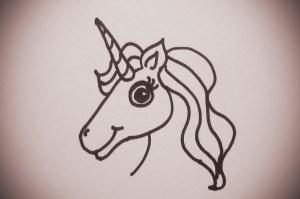 I would like to live in a world where I form my own definition about what it means to be beautiful. Beauty is, after all, subjective. It is in the eye of the beholder. If you’ve been paying attention, you’ve observed that Trump often makes statements about beauty. He seems obsessed with the topic, using the phrase “beautiful women” and ranking women by attractiveness. To my ears, “beautiful women” sounds like some kind of sacred voting demographic, or perhaps a type of mythical beast, too ethereal for the likes of us lesser mortals. If you want to have a laugh, read his quotes, substituting the word “unicorns” for this phrase. As in: “I tend to like unicorns more than unattractive women.” Or “I love unicorns and unicorns love me.” Ridiculous, isn’t it?
I know beautiful women. They are smart and kind, and because of that, they are beautiful in my eyes. I believe Trump’s definition has nothing to do with intelligence or character. I suspect it has to do with genetics and surgery. I’m not against genetics or surgery. If your DNA has provided you with highly symmetrical facial features, good for you. If you feel you can’t be beautiful without altering your body, go for it. Who am I to tell you what to do with your body?
Do whatever makes you feel beautiful, whatever your gender. Wear what you want. Wear makeup. Or don’t wear makeup. Plank. Or don’t plank. But don’t tell me I can’t be beautiful because I choose to do something different, or because I believe being educated is part of what makes me beautiful. I’m certain I’ll never make Trump’s list of beautiful women, and I don’t care. Why would I even want to be on that list? It’s demeaning. He can say anything he wants (and he does), but that doesn’t define me as a woman or a voter. Like I said, I’ll vote for the person who best represents my interests.
© Melissa Eskue Ousley 2016
These Are The Days
It’s easy to find excuses to avoid things. Case in point: exercise. I can find a hundred things to do instead of exercising. Start a load of laundry. Wash the dishes. Write a novel. I love to swim, but I’ve found excuses not to do it—the time it takes to drive to the recreation center, the increase in monthly fees.
Forget about running. I don’t run. Unless I’m being chased by a homicidal maniac wielding an ax, I don’t see the point. I’ll walk though, and I’ve found that pairing a treadmill with Netflix works to get me moving. It’s easier on my knees than running, so that’s a plus. I try to get in a couple of miles any day I have time, but sometimes I make excuses to avoid that too.
Before buying the treadmill, I could use rain as an excuse not to exercise. Now I can’t, but I sometimes use rain as an excuse for staying inside. I live on the beautiful Oregon coast, and we’ve got a number of trails meandering through forests or leading to beaches. I love hiking, so it’s a shame I haven’t gotten out every weekend to explore them all. I’m an Oregonian—rain is no excuse. If it were, we’d never get anything done.
Still, I have a bad habit of letting weekends slip away, sleeping in and doing mundane things I won’t care about in the long run. It’s easy to use the time doing things I can justify, like paying bills or finishing household chores. It’s just as easy to get lost surfing the internet. The rest of my family does the same thing, the four of us in our silos, on various devices, spending time in the same room without spending time with each other. All of us—me, my husband, and two sons—are introverted, so we’re comfortable having time to ourselves. We need that sometimes, to recharge from our busy weeks at work and school.
Last weekend we broke free from our bad habits. It was one of those glorious weekends when the sun was shining on the coast. I do love rain—without it the Pacific Northwest wouldn’t be green—but I love our sunny days. Summers on the Oregon coast are a dream. That’s why we have so many tourists, bumper to bumper on the highway. (And we appreciate them all, along with the money they invest in our economy.)
Since the weekend was so gorgeous, we decided to head to the beach. We unearthed our boogie boards from the garage, sorted through the sunscreen, trying to find a bottle that wasn’t expired, and pulled out our swimsuits and towels. We threw in a couple of shovels and buckets too, and then headed to Sunset Beach, one of our favorite places to play.
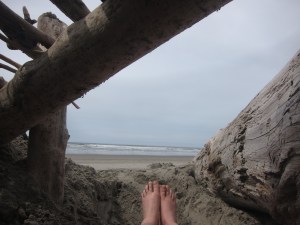 The boys wanted to build a driftwood fort, so that was first on our agenda. We scavenged the beach for logs big enough to use, yet small enough to carry (or drag), and got to work. A huge log had washed up near the dunes, so we built around that, excavating a bunker, and laying out logs and twigs to fashion a roof. We did a great job, creating a cozy spot to lounge and watch the waves.
After that, we grabbed our boards and caught some waves. We’re not cool enough to be surfers, but we love the ocean. (I keep saying we should at least take a surfing class. Maybe this will be the summer we do that.) The water was freezing. It was actually painful to wade in up to my waist, but I was willing to make the sacrifice for my boys. They won’t be twelve forever, and it won’t be long before they won’t want to spend time with me. They’ll be too busy hanging with friends, checking out girls. The clock is ticking, and I want to make the most of the time we have left.
After a whole lot of yelping and squealing, we finally got used to the cold. Translation: we were numb from the neck down, and having too much fun to care. Playing in the waves is not without risk. Besides the cold, there are riptides that could sweep us out to sea. There are hungry great whites that might nibble on us (unlikely) and sea nettles that could sting us (more likely, though maybe the cold will dull the pain). But there’s risk to everything, isn’t there? There’s risk crossing the street. Heck, there’s risk to eating dessert. If you use risk as an excuse to avoid doing things you love, you’ll never have any fun.
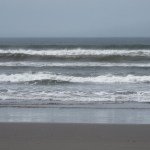
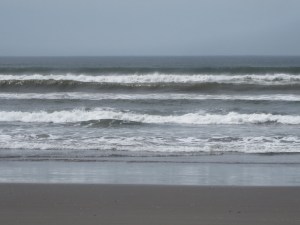 We have a lot of fun in the waves. It’s thrilling to see the perfect wave rolling in, and then to catch it in just the right spot so it carries you to shore. I love feeling the pull of the tide going out, right before a really big wave forms. I love the rush of speeding along, harnessing the power of the water. What I love most is hearing my sons shout with joy when they catch a good wave, laughing until their boards bottom out on the sand, and then scrambling to their feet, hurrying back to catch the next wave. These are the days they’ll always remember. These are the days made for living, and I don’t want to waste a single one.
© Melissa Eskue Ousley 2016
Be This Guy

There’s a story in the Bible about gratitude that has always stuck with me. Jesus was headed to Jerusalem, walking along the border of Samaria and Galilee. He came to a village and encountered ten men with leprosy. Leprosy is caused by bacteria, and if untreated, can cause deformity, crippling, and blindness. It still exists today. What you have to understand about the disease at that time is people with leprosy were considered unclean and cast out from society. This was because the disease was thought to be highly contagious, and people tended to think that if you were sick, you must have done something to deserve it. You sinned, therefore God punished you by giving you leprosy. You had to stay away from your family and friends. You couldn’t get a job. And without a job, you had to beg if you wanted to eat. But, you were an outcast, so who’s going to give food or money to an unclean beggar? Hardly anyone. Basically, it was a lonely, miserable illness.
The men with leprosy called out to Jesus, asking him to heal them. He did, and told them to go show themselves to the priests, so it would be known they had been cleansed and could rejoin society.
It’s a compelling story, but here’s where it gets interesting to me. Only one of the men came back to say thank you.
Luke 17:15-19
One of them, when he saw he was healed, came back, praising God in a loud voice. He threw himself at Jesus’ feet and thanked him—and he was a Samaritan.* Jesus asked, “Were not all ten cleansed? Where are the other nine? Has no one returned to give praise to God except this foreigner?” Then he said to him, “Rise and go; your faith has made you well.”
Do you get the writer’s sarcasm here? “There were these ten guys, and not one of them came back to say thanks except this guy, and look at him, he’s not even one of us. He’s just this dude, from across the border.”
 Here’s the question I ask myself: who am I in this story? Am I the person who skips off happily when somebody does something nice for me? Or do I take time to express my appreciation? I try to remember to be like the grateful guy rather than the others, though I don’t always succeed.
Still, whenever possible, I say thank you for the kind things people do, because no one’s required to be nice to me. Even our parents don’t have to be kind. In a world as dark as ours, sometimes parents don’t even like their kids, much less love them. (I’m blessed to have parents who love me and do nice things for me. Hi Mom and Dad.)
I’m a fan of handwritten thank you notes. Not for everything. I call or email to say thanks for things like birthday gifts, just because my family would think I was being ridiculously formal for sending a note. (Probably they’d think me pretentious as well.) But for some things, yes, I send a note.
This weekend I attended a book fair in Cannon Beach. Jupiter’s Books hosted 24 indie authors so we could chat with readers and boost our sales. This is no small thing for an independent bookstore to do. The owner gave us a generous cut on sales and invested who knows how many hours putting this event together, making sure it was widely advertised. I wrote him a thank you note because I truly appreciate him doing this for us. He doesn’t have to be so nice, but he is.
Sometimes I fear I say thank you too much. Is that possible? Maybe. In one note, I might say thanks three different ways. I can see how that could be annoying. I hope the recipient knows I’m being sincere. I am thankful, and I’d rather err on the side of gratitude, than let someone think I don’t appreciate a kind deed.
*Some things never change. People were pretty horrible to outsiders back then too. Samaritans were considered low-class people and it was taboo to associate with them. Really, the only person who was cool about Samaritans was Jesus. He often casts them as heroes in his stories.
© Melissa Eskue Ousley 2016
Save Yourself

This is me waiting to go through security at an airport: long before I get to the metal detector, I’ve got my jacket off, tickets and shoes in hand, pockets emptied of coins and keys, and bag positioned to pull out my laptop. I try to think ahead so things go as smoothly as possible, but of course, there are sometimes complications, especially when traveling with small children. There are two fears behind all this prep—missing my flight and holding up the line, annoying my fellow travelers.
When I stay in a hotel, I tend to keep my belongings in my bag, only unpacking what I need at the time, like toiletries or clothes for the day. I’ll hang up work clothes that might get wrinkled, but I never use the provided dresser drawers. If I do have loose items, like books or snacks, they end up stacked neatly next to my purse. Type-A behavior to be sure, but I wouldn’t say I’m a type-A person. It has more to do with anxiety that if I spread my stuff all over the place, I’ll forget something when I check out, or, if I’m rooming with someone, I’ll hog too much space and annoy them.
There’s a theme here—social anxiety about annoying people—but the other part of this is a desire to be self-reliant. To keep my crap together, so to speak. Self-reliance was a message drummed into me from the time I was young, but it’s also part of my personality. I love being independent, and I hate relying on other people. I want to be seen as competent. I think it also has to do with how kids, especially girls, are socialized. “Don’t make a fuss. Don’t draw attention to yourself. Keep your head down, and toe the line.”
I was a cheerleader in high school, and we performed stunts. I was a base, which meant I was the one with sneaker hickeys on my neck from letting another girl climb on my shoulders, holding her ankles tight so she could tower over the crowd. Sometimes we’d throw a girl into the air and join hands, forming a basket to catch her. It could be hazardous, both for the person being thrown and the people doing the catching. I had bruises to prove it. I never wanted to be the girl on top. It was partly a fear of falling, though I doubt anyone would have dropped me, not on purpose at least. Part of it was this savior complex I have—no one was going to fall on my watch. I knew, as a base, I had the strength to hold someone, and I’d let them crush me before I’d let them land on the unforgiving gym floor.
That attitude has served me well as a parent. I’m overprotective, but my kids have survived childhood thus far. The savior complex has gotten me into trouble a few times too, walking toward bad situations instead of away from them. I did stupid things when I worked in mental health. I was a naïve young woman who wanted to save the world, and that translated to volunteering in bad parts of town, providing therapy for homeless men. It’s amazing nothing awful happened to me, because I spent a lot of time alone in windowless rooms with addicts and parolees. Somebody must have been looking out for me, because none of the guys I worked with treated me badly, though I’m sure they doubted my competence. Sometimes I think about that girl and wonder what wisdom she thought she could offer people with far more life experience than she. Maybe they were kind because they knew more than I did about how vulnerable I was, in spite of my bravado.
Strength is a point of pride for me—I try not to look vulnerable. I’ve been known to brush off injuries for fear of appearing weak. When it comes to helping other people, I’ve gotten better about saying no, but at times I still take on too much instead of letting people know I’m swamped. When I get in a tight spot, I tend to keep it to myself, only sharing how bad things are with those in my inner circle.
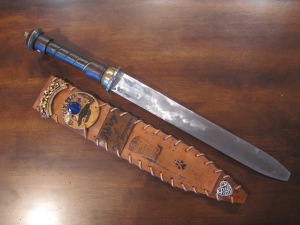
Exhibit A
Most of the time it’s good to be strong, to help others. I’ve never seen myself as a damsel in distress. For one, I’m not exactly dainty. Two, I favor boots over heels, and I’ll carry my own sword, thank you very much.* Usually, when I get in a sticky situation, I save myself. But what happens when I can’t?
The problem with working to look like you’ve got it together is people can’t always tell when you need rescued. If you’re like me, you don’t actually have it together all the time, but it’s hard to ask for help. I’d rather suck it up and suffer than expose my vulnerabilities. There have been times when I’ve needed saving, and I kept that fact to myself. Sometimes it was because I had a problem nobody could fix. Other times it was because I was so busy keeping up the illusion I didn’t need help, that I didn’t take time to connect with people so they’d be there to ask.
I’m trying to be better about this. I recently read Amanda Palmer’s The Art of Asking, and she makes valid points about giving, receiving, and letting people see you, scars and all. One thing she said that resonated with me was about the act of receiving—allowing people to help you is a gift you give. We need these exchanges, because none of us can get through this life on our own. She also said it’s easier to ask for help for others than it is to ask for yourself. I have found this to be true.
I’m lucky. I have loving friends. I know the closest among them would take me in if ever I showed up on their doorsteps in the middle of the night. But even among my most trusted friends I could stand to show a little more vulnerability, to be brave enough to ask for help instead of trying to save myself.
*I do own a sword. My dad made it for me. See Exhibit A.
© Melissa Eskue Ousley 2016
Pest Control

A short story in honor of April Fool’s Day. A seasoned assassin finds her breach of etiquette isn’t the only snafu at a friend’s party.
 I checked the address written on my invitation, and then the sign near the door. The Rose Petal Tea Room. This was the place. A brand new building plopped down in the middle of town, next to a strip mall, made to look old with its shabby chic white shutters and ivy starting to crawl up pink walls. Rachel would have called the color cheerful. It reminded me of that pink medicine you take when you’ve got the runs. Diarrhea pink, I decided.
Even before entering the restaurant, I felt a looming sense of doom. I could already tell—this event was not going to be my cup of tea. Normally, I wouldn’t frequent a place like this, unless it was for a job. My discomfort deepened when I entered the tiny boutique at the front of the tea room. Shelves lined the walls, and on every inch was something pretty and fragile—delicate tea cups and saucers, tea pots covered in roses and other flowers, and small porcelain figurines of women in Victorian dress. It was like standing in my grandma’s living room. Not that I don’t love my grandma, but I’ve never been able to relax when I visit. I’m not a large woman, but in her tiny house, I feel like a lumbering giant, clumsy and stupid—I’m that worried about breaking something.
There was a “Please wait to be seated” sign barring the entrance to the rest of the restaurant. I waited there obediently, checking the time. I was five minutes early, so that was good. Through the arched doorway I could see the hostess seating a gaggle of elderly women, all of them sporting gaudy purple hats with wide brims and red ribbons. Darn, I thought, forgot mine at home.
The hostess, a wholesome looking woman with a complicated updo and a pearl necklace, returned to her station. She looked mildly alarmed to see me, which did nothing to ease my own sense of being out of my element. “May I help you?”
Since she was acting like I came to rob the place, I gave her a smile and took my hands out of my jacket pockets so she’d see I was unarmed. “Yes, I’m here for a bridal shower. I believe the reservation is under Rachel Anderson.”
The woman scanned the list at her podium, and frowned. “I’m sorry, ma’am. There’s no reservation for Ms. Anderson.” She looked me over again. “Are you sure you have the right place?”
I was starting to question that too, so I retrieved the invitation from my pocket and showed it to her. “Rose Petal Tea Room, two o’clock.” I was surprised I hadn’t seen Rachel coming through the door yet—it was her party after all. The hostess glanced over at the clock above the archway. “I’m a little early,” I apologized, not sure why I was doing it. I thought it was good etiquette to arrive on time, if not a little early, but maybe I should have been fashionably late.
The woman looked over her papers again. I caught a glimpse of a seating chart. “Well, I can go ahead and seat you, and then bring your friend over when she arrives.”
“There might be a few of us,” I said. I had no idea how many people were supposed to come.
She nodded. “That’s quite all right. We’ll move your party to a larger table if need be. Your name?”
“Morgan Connors.”
The hostess wrote my name on the chart and grabbed a menu from beneath the podium. “Thank you. This way, Ms. Connors.”
She seated me in the middle of the tea room, fussed with the tableware for a moment, and then returned to her station to greet some women who had just arrived. I looked for Rachel but didn’t see her among them. I scanned the large room, hoping to recognize a familiar face among the lace tablecloths and pastoral landscapes that looked as though they were of the English countryside.
It was then I realized why the hostess had acted strange when she saw me. I’d committed several major faux pas with my wardrobe. One, I was dressed all in black: black skinnies, black t-shirt, black moto jacket and boots. The other patrons hadn’t even risked a little black dress. I was drowning in a sea of pastels. Two, I was the only one wearing pants. I owned exactly one dress, and that was only because I’d been coerced into being a bridesmaid. I had an idea it was bad form to wear the same dress to the bridal shower and the wedding, so my single dress was hanging in my closet, awaiting Rachel’s big day. Three, my hair was slicked back and woven into a tight braid, which is good form in my line of work. Intricate updos and soft flowing locks, like the ones I was seeing in the tea room, could get a girl killed. I’d learned pretty fast that in a fight, you pull back your hair and you never wear earrings. Not if you want your earlobes to remain intact. Against all those blush pink, baby blue, and mint green dresses, the only way I would have stood out more was if I were a three-hundred pound biker with a beard covering half his face and tattoos covering the other half. I was glad my own tattoo was safely covered. Wouldn’t want to have to use smelling salts on anyone.
I checked the time again—it was now fifteen minutes after two. Where was Rachel? I considered leaving when I saw her sister Stephanie headed from the ladies room down a hallway. I jumped up from my chair, careful to push it back in so no one would give me a dirty look, and then followed her.
As I entered a room draped in lacy bridal decorations, I finally caught sight of my friend, sitting at the head of the table, surrounded by women dressed nothing like me. Rachel stood up and gave me a bright smile. “You came!” She crossed the room to wrap me in a hug.
I’d do anything for Rachel, even bear haughty looks from her future mother-in-law, Mrs. Rollins, and the maid of honor, Elizabeth Whitney. Something clicked into place. That was why the hostess hadn’t found Rachel’s name. The reservation must have been under Elizabeth’s. “Sorry I’m late,” I whispered to Rachel.
“Just glad you’re here,” she said. We’d been close since college, when we went through a few scrapes together. Not the kind of stories you share with polite company, since they involved actual blood being shed. I found it amusing no one in the room knew about our sordid past, but I wasn’t about to ruin the party by sharing those secrets. Rachel’s reputation was soiled enough just by associating with me.
Rachel took my hand. “Come on. I saved you a seat.” She led me to the chair next to hers, and I settled in, avoiding eye contact with everyone else. “We were about to eat.”
A server, holding a large platter, set the tray on a stand and began placing dishes around the table. “Glad you could make it,” Elizabeth said, from across the table. She held out an elegantly manicured hand. I shook it with a firm grip, my own nails short and unpainted. “Megan, was it?” she asked.
As I released her hand, I tried to hide my annoyance. We’d met on a few occasions, but every time, Elizabeth acted like she’d never seen me before. I smiled sweetly. “Morgan. And you’re Liz, right?”
She scowled, placing her napkin in her lap. “Elizabeth. Never Liz.”
Rachel shot me a warning look, but I could tell she was hiding a laugh. I gave her a sly smile. I didn’t know what she saw in Elizabeth, but then again, I wasn’t sure what she saw in me either. I was just glad I hadn’t been tagged as maid of honor and forced to pull off a fancy party like this. I had skills a woman like Elizabeth couldn’t imagine, but I had to concede—she was a better choice for a shindig worthy of its own social media following.
The server set a plate in front of me, which held five tiny sandwiches. I use the term sandwich loosely—they were more like round slices of bread about the size of a half-dollar, filled with green stuff of unknown origin. I picked one up as delicately as I could manage and chanced a bite, chewing slowly. The mystery filling wasn’t bad, something with spinach and garlic I thought. My stomach growled, louder than I would have liked. I stole a look at the other women, doing more chatting than eating. I popped a second sandwich in my mouth. Would it be poor etiquette to request seconds? I’d kill for a fat, juicy cheeseburger.
“And what is it you do, Morgan?” Mrs. Rollins asked me. Like the hostess out front, she was wearing pearls, and her hair was twisted into a French roll.
I looked at Rachel. This was always the hardest part—explaining what, exactly, I did for a living. She nodded, and I said, “People come to me with problems, and I make them go away.” Vague, but I couldn’t explain it better without fear of making Mrs. Rollins queasy.
Rachel’s mom-in-law-to-be looked intrigued. “What sort of problems?”
Elizabeth-never-Liz chimed in. “Rachel said you were an exterminator.”
I raised an eyebrow at Rachel, and she shrugged. Exterminator was technically correct, but the preferred term was assassin. Still, hunting down nasty characters for pay wasn’t something everyone could accept. “Pest control,” I agreed. I took a sip of tea, hoping Mrs. Rollins’ curiosity was satisfied.
I was saved from further interrogation by a cake.
Another server entered the room, carrying an elaborately iced dessert, topped with edible flowers. She placed the cake in front of Rachel while several of the ladies applauded in approval. Rachel beamed at Elizabeth as the server prepared to slice the cake.
Then the flowers on the cake moved. I stared as they pulsed, as though something were wriggling inside the confection, trying to climb out. And it did.
A brown, rat-like face surfaced, popping out of the icing to peer up at Rachel, a pink and yellow hibiscus still balanced precariously on top of its head.
“A rat!” Mrs. Rollins shrieked. She pushed back from the table and climbed on top of her chair with an agility you wouldn’t expect from a woman in her sixties. Fear is a powerful thing.
The rest of us looked on in surprise. The cake crumbled as three other figures burst forth. They were tiny, hairy things, standing up on their hind legs and hunched over in a way that made it easy to mistake them for rodents. Except some of them were wearing clothes. Primitive looking vests and scarves, yes, but clothes nonetheless. Not rats. Boggarts. I’d tangled with malicious house spirits like these before.
The one in the velvety green vest launched itself at Elizabeth’s face, sending her backwards in her chair, head over red-soled Louboutins. It looked like Mrs. Rollins was going to find out what I did for a living after all. I leapt up from my seat and grabbed the table salt, screwing off the top as I rounded the table.
Elizabeth lay sprawled on the floor, her screams muffled by her long, pleated skirt, which was hiked up over her head. I yanked the skirt off her face to find her clawing at the hairy little monster biting her. I upended the salt container on the boggart, and it popped like a balloon, drenching Elizabeth with dark slime. I was handing her a cloth napkin to wipe off the goo when I heard Rachel yelling.
I turned to see my friend dancing in a circle, pounding herself on the back of her head. It almost looked comical, except for the nasty little beast pulling her hair. The boggart with the scarf had entangled itself in her chignon, no doubt attracted by the rhinestones in her hair pins. Like other faeryfolk, boggarts like shiny things.
What they don’t like is iron, and I had a horseshoe in my jacket pocket, which I carried for just such an occasion. Okay, I’d never been in a situation quite like this, but you get the idea. This kind of thing happens more than you’d think, and it’s good to be prepared. You might want to take notes.
I held the ends of the horseshoe up to the boggart. It howled, a kind of guttural growl as the iron burned its flesh. It didn’t explode like the first boggart, so I grabbed a fork off the table and skewered it, working it free of Rachel’s hair. She seemed unharmed, but the boggart began to melt, curling its body around the silver-plated utensil. I tossed it on the ground and scanned the room for the other two creatures.
One was shoving frosting in its mouth while the other taunted Mrs. Rollins and the other ladies, most of whom had joined her on their chairs. The server had backed up against the wall, her face frozen in a look of horror.
I grabbed the tea pot from the middle of the table and forced the two boggarts inside, pushing them along with the horseshoe. They clawed at me, but the toxic iron did the trick, persuading them to submit. I dropped in a little St. John’s Wort, retrieved from another pocket in my jacket, replaced the lid on the teapot, and let them steep in the mixture. They wouldn’t be bothering anyone else.
I checked on Elizabeth, who had gained her feet. She’d managed to get most of the slime off her face, but her nose was bloody and looked like it had been gnawed on. Nothing a good plastic surgeon couldn’t fix. She nodded to me, not quite a thank you, but I’d take it. I couldn’t fault her for being too shaken to express a full appreciation for my talents.
As I helped a still trembling Mrs. Rollins down from her chair, she said, “An exterminator, you say?”
“Something like that.”
She gave me a grateful smile. “I’m glad you came, Morgan.”
© Melissa Eskue Ousley 2016
Stuff

I have this fantasy where I get rid of all my stuff and live in a tiny house. It’s a charming cottage, with cedar shingles and flowers blooming in window boxes. Most importantly, it’s free of clutter. What little I still own fits within its walls. There’s a place for everything and everything is in its place. I park it next to a lake, where I can go kayaking if I like, or maybe just lounge in a hammock and read. Or, if I feel like an adventure, I hook my house up to a vehicle and go. It’s a simple, serene life.
It’s not realistic right now. I have too much stuff. Books would be a problem—I own way too many books. (I have a conflicting fantasy about owning a library with a rolling ladder. I don’t think that would fit in my tiny house.) I also have a husband, two tween boys, a dog, and a piranha. It wouldn’t be easy sticking all of us and our stuff in a tiny house. Maybe this cottage fantasy is more of a retirement plan, and I can work on paring down worldly possessions bit by bit every year.
 I did clean out my closet this weekend, getting rid of clothing I haven’t worn for a long time either because they don’t fit or are no longer in style. I felt an inordinate amount of joy over seeing my clothes arranged by type (dresses, jackets, pants, skirts, tops) and by color. I admit to being a little obsessive compulsive about such things. I try not to force the urge on the people I live with, though I did make my boys go through their clothes and toys and get rid of things they no longer use. The three of us stared at their neatly organized closet, amazed at how much better it looked, thrilled to be free of clutter, even though my sons would have preferred to spend their time doing other things. They are growing up differently than I did, without so much of an attachment to material goods. They still want stuff, but most of those things are virtual and don’t take up physical space. I don’t think that’s a terrible thing.
I went to a talk by Dee Williams, author of The Big Tiny. After a medical emergency, she realized life is short and chose to live simply. She sold her large house which drained her finances and required too much upkeep for someone with health issues. She built a tiny house, and parked it behind a friend’s residence, bartering space for help with an elderly relative. At her presentation, Dee brought a tarp with her home’s 84 square foot floorplan to demonstrate how tiny her house is. She has a composting toilet but no running water. Her friend lets her bring in water and shower. Running water is a must for me, but I could certainly appreciate a utility bill of less than ten dollars a month and that it would take about five minutes to clean the house.
In contrast, I recently watched a documentary on Iris Apfel. Now in her nineties, Iris is a business woman, interior designer, and fashion icon, known for her large, round glasses and style with layering accessories. She’s a force of nature in the fashion industry, setting trends and mentoring designers. She’s a collector too—curating shows about fashion at the Met. She’s a fascinating person with refreshing views on beauty. She said, “I don’t see anything so wrong with a wrinkle. It’s kind of a badge of courage.” I agree. In the film, she relates a story about how she used to frequent Loehmann’s, a shop in Brooklyn. The founder would sit on a high stool, observing customers. One day the woman called her over. She said, “Young lady, I’ve been watching you. You’re not pretty and you’ll never be pretty, but it doesn’t matter. You have something much better: you have style.” While that would have crushed some people, Iris took it as a challenge to use fashion to become interesting. She succeeded, and went on to live a fabulous, jet-setting life filled with dazzling couture.
Here’s what bothered me about the film though. At one point, Iris takes the audience for a tour of her warehouse, filled with racks of clothing and remnants from her interior design business. I couldn’t help but wonder—valuable as it may be, what does a person do with all that stuff? It was just sitting there, unused and gathering dust. I think that has less to do with Iris Apfel and more to do with people who grew up during the Depression, who had to go without. My grandfather was the same way, hoarding tools he might someday use, as well as things he hoped to sell.
After he passed away, my mother was tasked with cleaning out his house and discovered countless brass keys and aluminum cigar containers. He wanted to sell the metal, but never got around to it. He was a man of few resources who had to make his own way. He was never wealthy, but he built a home and a carpenter business, and he took care of his family. He held onto things because he knew bad times could return, and he wanted to be prepared.
I can understand that. Still, after seeing what a challenge it was for my mom to unload all that stuff after he died, I decided I want to live my life differently. I don’t want to be weighed down by material possessions, and I don’t want them to be a burden to people after I’m gone. I don’t think my grandfather ever meant to burden my mother—he took pains to make funeral arrangements before he died, so it would be easier for those left behind to grieve. After my grandmother died, he bought a plot next to hers and had a headstone made that they would share. It was already carved with his name—the only thing missing was the date of his death, to be added after he passed. Even so, his house still hasn’t sold, and my mother has to pay taxes on it. I doubt that’s what he wanted, but what can you do? You can’t force interest from a buyer.
Maybe the same thing will happen when I die—my kids will have an estate sale and then try to sell my house. I hope I’ll do things differently though. To me, it doesn’t make sense to hold on to things I’m not using. As I age, I want to purge extras from my life and choose to live simply. I hope I can downsize to my tiny cottage by the lake, free of all the possessions currently tying me down.
© Melissa Eskue Ousley 2016
Unsolicited

This week I was talking with a friend about advice. When you’re seeking advice, it’s always wonderful to find someone who can help you, who can say the exact right thing to help you solve a problem or give you a nudge to take a risk you would have been too scared to take otherwise. Sometimes you’re not seeking advice though, and when it comes unsolicited, usually from someone who means well, it can be difficult to digest. My friend related the story of her wedding shower, when someone announced that everyone present needed to share marriage advice with her. Some of the advice touched on topics the guest of honor didn’t feel comfortable discussing in a public setting. I imagine the person who started the chain of advice-giving had only the best of intentions, but my friend still felt like a bug, skewered to the wall and put on display.
I could relate. When I was trying to get pregnant, I felt like I was suddenly in the spotlight, a beacon for unsolicited advice. I have health issues which made it difficult to have children, and that was hard enough as it was, trying to understand what was going on with my body, and grieving the fact that I was never going to be able to have children like a normal person, that I would be lucky to have a child at all. It made me feel like a failure, like I wasn’t a real woman. People with good intentions, who had no idea what was going on with me or who didn’t understand the medical issue, came out of the woodwork to give me advice. A few people asked questions that were shockingly invasive.
Part of the problem is I am introverted, and wanted to keep the issue to myself. I hadn’t gone around telling everyone about my troubles, but some people in my inner circle had. Part of it was I was embarrassed—infertility is a deeply personal issue. It wasn’t my fault my body was screwed up, but I still felt like I had failed somehow. Like I was broken. There was so much pressure to have children—it was part of the culture that surrounded me. That was what a woman like me was supposed to do. No one said it directly, but within all those intrusive bits of advice, there was a message: if you can’t have children, you are to be pitied because you are not fulfilling your role. Never mind that I had a master’s degree and was working toward a doctoral degree. Never mind that I had a good job. Never mind that I was an adult in my late twenties who paid her own bills. It didn’t matter how independent or accomplished I was, it all came back to my ability to reproduce. The barrage of advice was relentless, and made me feel even worse about the situation.
Finally, I got pregnant with twins. I was scared to tell people for a while, worried I’d jinx myself and lose my children. I felt great joy and a sense of relief about finally being able to have children, and I hoped I’d find respite from all the advice and questions. I didn’t.
When you are pregnant with multiples, you start to show early, and my bulging waistline now made me a target for strangers. I worked with the public, providing customer service, and nearly every person, every day, had something to say about my pregnancy. It was exhausting. I was often tempted to hold up my hand, stopping people mid-sentence, to tick off a list of questions for them. “Are you pregnant?” “When are you due?” “Boy or girl?” “Twins? Oh my gosh! You’re so lucky!” The same thing over and over. Every. Freaking. Day. Now and again, I’d get a real weirdo, who would ask something off the wall. One guy wanted to know who my OBGYN was. “Why do you need to know that?” I asked him. Seriously, why did he need to know?
Now the unsolicited advice I got was about what I should be eating, how much weight I should or should not gain, what I needed to know about giving birth, how to get my figure back after birth, and how I should care for my bundles of joy once they arrived. Again, it was all well-intentioned. But here’s the thing: I am not normal. The body I live in is absolutely not normal. I can accept that, but what works for every other woman on this planet is not necessarily going to work for me. For example, I know that carbs are my kryptonite. A low-fat, veggie-only diet is never going to work for my body. I need low-carb protein, dang it, and woe to the fool who denies me. I am a carnivore, and you should not cross paths with a hungry carnivore. Especially one who is eating for three.
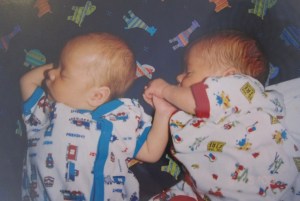 I learned to listen to my body and disregard bad advice. I learned that when you care for multiple babies, all those nice little parenting rules go flying out the window. You’re in survival mode, and you do what you need to do to keep those things fed, diapered, and happy, or you’ll lose your mind. When people ask me what it was like to have twins, I’m way too honest. “That first year was hell,” I say with a sweet smile. If they say they always wanted to have twins, I’ll throw in a horror story as a bonus treat (preferably one that involves projectile vomiting or poo—I have quite a repertoire of those). One woman told me she always wanted to have triplets. I informed her she was mental.
Don’t misunderstand me. I love my children, and I’m so blessed to have them. They are awesome kids, and I feel grateful for that too. In spite of my failings, they are turning out to be wonderful human beings. But I’ll tell you the same thing I told my sister-in-law, when she was having a baby shower and someone decided she needed pumped full of advice. “Having a kid is not going to be easy,” I said. “Everyone is going to give you advice. Some of it will be good advice, some of it will be bad. Do what works best for you and your baby, and don’t worry about what everyone else thinks.” That’s the best advice I can give.
© Melissa Eskue Ousley 2016
Forty…Something
 When I moved to the Oregon coast five years ago, the first place I went was to the wreck of the Peter Iredale. As I stood next to that rusted iron hull and dipped my toes in the frigid surf, I remember feeling blessed to live in the beautiful Pacific Northwest. I felt like I was finally home after wandering in the wilderness for many years. I turned forty last year, and started a new birthday tradition: to revisit that moment each year, sneaking away to the shipwreck to slip my feet into the ocean. A ritual to reflect on my life and express gratitude for the good things.
I celebrated my birthday this week, but didn’t have a chance to visit the Peter Iredale on the actual day of my birth. Twin storms blew in, and with hurricane force winds and twenty foot waves, the beach wasn’t exactly peaceful. I visited once the winds calmed down, but even then, I had to brave freezing rain to set foot in the shipwreck for a few short moments.

Soaked but smiling
By the time I got back to the car, I was dripping—my hair completely soaked and plastered to my face—like I’d just stepped out of the shower and into a wind tunnel. I had a good laugh about my ill-fated adventure as I cranked up the heat and drove home. So much for serious self-reflection.
My forties have been good thus far—maybe my best decade yet. Not physically, as my worn out knees can attest, but definitely emotionally. I’m more at peace than I’ve ever been.
It seems like my twenties were all about reaching milestones: getting my education, obtaining the right job, traveling, getting married, buying a house, having kids. It was a race to be a grown-up, to prove myself. It’s not that I was trying to impress anyone in particular. I had goals for myself, things I felt I needed to accomplish to be whole. I managed to check off my to-do list just before I entered my thirties.
The first half of my thirties were rough, juggling the care of small children with a demanding job. I felt out of balance most of the time, and stress took a toll on my physical and emotional health. A major reorganization at work made things even harder. I felt broken, longing for change, clinging to faith so I wouldn’t lose hope. It was a dark time I wouldn’t want to revisit, but it served a purpose. I started writing and that kept me sane. Then we sold our house, moved from Arizona to Oregon for a job opportunity, and I found respite against chaos through a new life. As bad as things were, I’m glad I experienced them. I’m stronger now than I was, and without those stressful times, there might not have been an impetus to change. I realized I can’t live without writing. It’s something I have to do, even if that means writing late at night after working all day to pay the bills.
In the last half of that decade, three of my books were published. It wasn’t easy. I learned hard lessons, and I’m still learning. I’ve made mistakes, but in the process, I’ve become a better writer, and I’ve learned a whole bunch about marketing and social media. As tough as it’s been, I’ve relished learning. There were moments of self-doubt and despair to be sure—a sense of scaling an impossible obstacle, thoughts about digging a hole and wondering if I’d ever be able to climb out. Overall though, I feel energized by the challenges I’ve faced in building my writing skills and getting exposure for my work. I have lots of ideas for stories I want to write.
So now I’m forty-something. I’ve survived (in no particular order) a close encounter with a rattlesnake (and a bear—though not at the same time, and the bear wasn’t as scary), a fist-fight (I didn’t start it, but I sure as hell finished it), break-ups and make-ups, betrayals from close friends and admired mentors, a boss from the fiery depths of Hades, an equipment malfunction forty feet under the sea, a stalker, a hurricane, major surgery, and an endocrine disorder that will probably kill me if I don’t get hit by a bus first. I have constellations of scars, souvenirs of battle. (And so what? Lots of people have survived worse.)
But here’s the great thing about being in your forties, kids. You just don’t care anymore. I’m not saying I don’t care about people. I do. If I’ve adopted you into my fold, I love you unconditionally. It’s you and me against the world. I’m passionate about the people and things I love. But I’m not out to impress anyone. Not anymore. And that is liberating.
This is who I am. A little odd, probably not entirely sane, but content to be myself, and at peace with my life. I don’t feel the need to apologize for that, and I won’t cave to be something I’m not. I don’t have all the answers I thought I had in my twenties, but I’m okay with not knowing as long as I keep learning. I’m still driven to reach my goals, but I don’t feel the same pressure to make things happen. I’ve lived long enough to know nothing ever happens quite like you plan, and I’ve failed enough to know I can survive and things will work out eventually. This is me at forty one.
© Melissa Eskue Ousley 2016
The Naked Old Man and the Cabbie

After I finished my master’s degree and got my first grown-up job, I decided to reward myself with a trip. I had been focused in college, trying to get through as quickly as possible to cut expenses. Perhaps overly focused—I took classes year-round, dedicating summer and winter breaks to study, as well as to working to pay for school. I’m not sure I would do it the same way if I were to go back in time—maybe I wouldn’t push so hard. Maybe I’d take advantage of a study abroad opportunity. At the time though, travel wasn’t something I could afford.
The first trip I took was to Europe. Since then, I’ve gotten to go to other places, like Australia and Puerto Rico. That first excursion was different though—I was on my own for the first time, halfway across the world. Well, not quite on my own. I signed up with a tour group, expecting to meet up with other travelers in their twenties. Instead, I landed in Amsterdam and discovered my fellow travelers were all of retirement age. After the initial awkwardness wore off, I had a wonderful time. It was like traveling with two dozen affectionate grandparents. I still stay in touch with one of the women I met. She’s now in her nineties, and sharp as ever. From her, I learned that having style is more about confidence than what you wear. She had so much charisma, it was easy to forget her age.
One of the most important lessons I learned from that trip is the world is not a theme park created for my amusement. I wasn’t in Disneyland. I was visiting real countries with real consequences. This was most evident to me in Venice. Our group was headed to dinner, and somewhere, dazed with wonder walking those beautiful labyrinthine streets, I fell behind. For one panicked moment, I was lost. I didn’t know where I was, or where we were headed. I knew no one (though some of the men in the streets seemed awfully eager to get to know me). Suddenly, the world seemed dark and dangerous. Luckily, our guide noticed I was missing and backtracked to find me. I was fortunate someone was looking out for me. From then on, I took pains to stay with the group.
Another important lesson from that trip was this: people think differently, and that’s okay. Growing up in America, I was unaware that people in other countries are not as squeamish about nudity. Eager to use the hotel’s pool in Munich, I donned my suit, grabbed a towel, and opened the door to the recreation area. An old man sat just inside the entrance, a white bathrobe draped over his shoulders. I’m not sure why he had the robe, because he sure wasn’t using it for its intended purpose. I got an eyeful. Old man full frontal. Shocked out of my naivety, but determined to try to fit in with the locals, I resisted the urge to run back upstairs to my room, and swam anyway. I wasn’t ready to shed my own suit, nor will I ever be, but I realized my way of thinking wasn’t representative of the rest of the world. I think that’s a good thing, because I learn more interacting with people who are different from me.
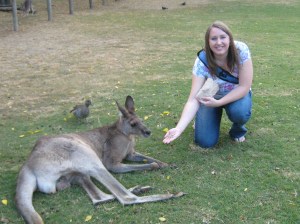 Then there was my trip to Australia. One night I gazed at different constellations than the ones I knew, and watched as a fruit bat sailed past the face of the moon. I met scuba divers from all over the world in the Great Barrier Reef, played underwater paparazzo with a shark, fed kangaroos, sat in on lectures at a university, and discovered that beets come standard on burgers in Australia. I’m not a fan of beets, but I loved learning that ketchup is called tomato sauce in the land down under. Even better, child safety seats are called baby capsules, which sounds much more exciting. Like tiny flying saucers for babies.
I also learned that the United States is on a world stage. At the time, one of the Bush daughters was getting married. Most Americans I knew could not have cared less, but I remember watching the news in Australia, which covered the story. Over b-roll of collectible plates featuring the young couple, the reporter claimed the nuptials of the President’s daughter were “as close to a royal wedding” as America gets. That aside, the Australians I spoke with knew more about American politics than I did.
One day a cabbie asked me about the upcoming presidential election, and whether I planned to vote for Obama or McCain. He favored Obama because he felt world relations would fare better under his leadership. I was surprised he had an opinion about it—I knew nothing about Australian politics, other than what I’d seen on the news during my stay. I realized how we vote in America doesn’t just affect the United States. There are global implications. I knew this, in theory, before that conversation, but hearing it from someone with a different worldview underscored the point.
As I’ve followed our current presidential election, I’ve been thinking about that cabbie a lot lately. I wonder what he thinks about this round of candidates. I hope, as a country, we do right by him and our other international neighbors. I hope we vote wisely for all of us.
© Melissa Eskue Ousley 2016
Monsters of the PNW: Colossal Claude

The mouth of the Columbia River is a dangerous place. The bar is so deadly, it’s been dubbed the Graveyard of the Pacific. Hundreds of ships have wrecked at the Columbia Bar, thanks to the fire hose force of the river mixing with tumultuous ocean waves. Add in gale force winds and constantly shifting sand bars, and you can see why this part of the world is so wild.
It’s wild in other ways too. Orcas frequent the mouth of the river, feasting on salmon. Great White sharks cruise the coastline, hunting seals. Humpback whales have been spotted 14 miles inland, near the Astoria-Megler bridge. This towering green bridge spans the four-mile-wide river, connecting Oregon to Washington. The Columbia River is also rumored to be home to a sea monster.
 Colossal Claude has been described as being about 40 feet long, including an eight-foot-long neck. Its body is said to be round, ending in a tail. The beast’s head has been alternately described as looking like a maned camel, or having an “evil, snaky look.” Some people believe the creature resembles a plesiosaur, comparing it to the Loch Ness Monster.
One of the first reported sightings of the monster was in 1934, by the crew of the Columbia River Lightship, a floating lighthouse. As the story goes, the crew observed the animal for some time using binoculars. They wanted to take a lifeboat out to get a better look at the creature, but officers denied the request out of worry the beast would capsize the small boat.
Three years later, another crew reported seeing the creature. Skipper Charles E. Graham on the commercial fishing trawler Viv provided a hauntingly similar description to what the crew of the lightship had reported. Around the same time, about 150 miles down the Oregon coast, near a rocky area known as the Devil’s Churn (south of Yachats), a couple reported seeing a similar animal.
In 1939, the crew of the Argo, another fishing vessel, got a close encounter near the mouth of the Columbia when the creature reared up over ten feet above the water. It watched them calmly as it took a twenty-pound halibut of the ship’s lines and ate it. According to the ship’s captain, Chris Andersen, the creature’s “head was like a camel’s. His fur was coarse and gray. He had glassy eyes and a bent snout.”
The description of Claude having fur makes me wonder if the creature could be some kind of long-necked seal (assuming it actually exists). The waters of the Columbia and the Pacific are frigid, but marine mammals thrive here. Our river is teeming with fish and both seals and sea lions make their homes in the river and along the coastline.
The water is much too cold for a marine reptile, but the idea of a plesiosaur on the Oregon coast is not that outlandish. In 2003, paleontologists discovered a plesiosaur skull near Mitchell, Oregon. This 25-foot-long reptile lived about 80 to 90 million years ago. Called the “Tiger of the Cretaceous Seas,” it was a top predator and a powerful swimmer. There’s a deep trench at the mouth of the Columbia. It is possible a similar creature could have survived and remained hidden, except for rare sightings?
Here’s something else to consider. Colossal Claude isn’t the only sea monster in the Pacific Northwest. There’s also Caddy (short for Cadborosaurus), a sea serpent allegedly living in Cadboro Bay in Greater Victoria, British Columbia. Then there’s the Ogopogo, a similar creature in Okanagan Lake in British Columbia. Both Caddy and Ogopogo are described as having horse-like heads and long necks. There have been over 300 reported sightings of Caddy, and the creature is often described as having anterior and posterior flippers. Interestingly, a Caddy-like creature has been found within the legends of indigenous people throughout the Pacific Northwest, from Vancouver to Alaska. The Inuit people put a picture of the creature on their canoes to keep it away.
What do you think? Does Colossal Claude exist? I don’t know if it does, but I have a feeling there are still a few mysteries lurking under the surface of the Columbia River.
© Melissa Eskue Ousley 2016
Monsters of the PNW: Bandage Man

Urban legends never cease to interest me. There are the old standbys you’ve probably heard before, like the killer who escapes from prison and has a hook for a hand. Or the one about the girl who is driving on a lonely road one dark night when someone starts tailgating her, flashing their car’s high beams. When she finally gets home and runs into her house to escape the weirdo following her, she finds out the guy driving the car wasn’t a psycho after all, but actually saved her life. Because there was a man in her backseat, you see, a man with a knife. Every time the man was about to stab her, the hero flashed his high beams and the man ducked back down behind the driver’s seat. These stories get passed down from a friend of a friend of a friend, and they must be true, because they happened to somebody’s cousin or aunt.
Here’s one you might not have heard before. On the northern Oregon coast, where the Oregon Coast Highway meets the Sunset Highway (the junction of the 101 and 26), there lives a legend. “Lives” might not be accurate, because no one knows if the Bandage Man is alive or dead. Perhaps he’s undead.
As the story goes, one night a young Cannon Beach couple went out for a drive in pickup truck and parked in the forest near the junction. They weren’t paying a lot of attention to what was going on outside the vehicle because they were busy doing the kinds of things teenagers do in parked cars. You know, gaze at the stars. (Teenagers are really fond of astronomy.) Anyway, all of a sudden, the truck jounced a little, like someone had climbed into the bed of the truck. Then, BAM! Somebody banged on the back window.
 The young couple turned to see a crazy man wrapped in bandages, slamming his fists against the window of the truck, trying to get in. So they did what any sane person would do. They freaked out. Then they drove off, back to the city of Cannon Beach. By the time the boyfriend got to the girlfriend’s house to see her safely home, the bandaged man had vanished. But when the boyfriend peeked into the bed of his truck, he found a piece of gauze much like the man’s bloody wrappings. And it stank like death.
So what is the Bandage Man? A reanimated mummy? Unlikely. A ghost? Maybe. Some people say it’s the ghost of a logger who was horribly burned and wrapped in bandages before he died. If you drive in that area at night, he might just hitch a ride, and you’ll find out who—or what—he really is.
© Melissa Eskue Ousley 2016
Monsters of the PNW: Sasquatch

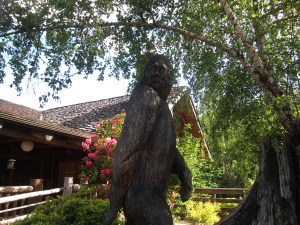 You see sasquatch everywhere in the Pacific Northwest (as an icon, at least). On the Oregon coast, we’ve got Bigfoot’s Steakhouse, and the Elderberry Inn on the Sunset Highway sports the silhouette of a sasquatch next to a giant frying pan. Camp 18, another restaurant along the same highway, is known for its logging museum and carved sculptures. Among these are two sasquatch statues.
A fellow author who has written about sasquatch once told me the area around Camp 18 is a sasquatch hotspot, with a number of sightings having been reported over the years. I can understand why—halfway between Portland and the coast, the restaurant sits in the middle of a vast forest in the Coast Range.
As you drive along the highway, you can see swathes of open land, where timber has been harvested. For the most part, however, the mountains are still pristine, some areas seemingly impassable because they are so overgrown with trees and vegetation. It’s easy to imagine large animals thriving unseen in these wild places.
I have never seen bigfoot in those woods (or anywhere else), but I think it’s possible a large animal could exist in a place like that and be seen only rarely. Bears, wolves, and mountain lions live in our forests, but I’ve never seen any of those animals up close, though I’ve been hiking trails on the coast for nearly five years. I have seen plenty of elk, deer, and raccoons, but no sasquatch.
It seems other people have seen something though. If you go to OregonBigfoot.com and search by county, you can read about alleged sightings and get a clear idea about where they occurred. I don’t know how many, if any, of the reports are credible, but I’ll give you this: it is eerie to read about sightings occurring in places I’ve hiked.
Evidence about sasquatch has never been accepted by the scientific community, but I’m fascinated by the legends, especially those from indigenous people. Native Americans in the Pacific Northwest have acknowledged sasquatch’s existence for centuries. Skookum, a word referring to spirits, was also used to describe sasquatch. There are stories about Basket Woman, a cannibal ogress who kidnapped children and put them in her basket. I don’t know how hairy she was, but it’s interesting that she was a giant. And, of course, there is Ape Canyon at Mount St. Helens, where a number of sasquatch sightings have been reported.
I don’t know if sasquatch exists, but I would like to think it does. I love the idea that there are still puzzles to be solved, that, in spite of all our technological advances and global exploration, mysteries remain.
© Melissa Eskue Ousley 2016
 MELISSA ESKUE OUSLEY